Solemn Crowd Beneath Iran’s Stormy Map

Iran Retiree Protests Spread as Rial Falls 13.8% and Liquidity Growth Hits 54.4%

ALERT LEVEL: ELEVATED · Iran (Tehran, Isfahan, Shush/Khuzestan, Tabriz) · Event: 27 Sep 2026 · Issued 01 Oct 2026 

This is Elevated rather than High because the protests are recurring and pension-focused, not yet a general strike. The alert moves to High if strikes spread to oil, gas or petrochemical workers, or to the bazaar, or if the free-market rial passes about 250,000 tomans per USD. 
1. What happened 

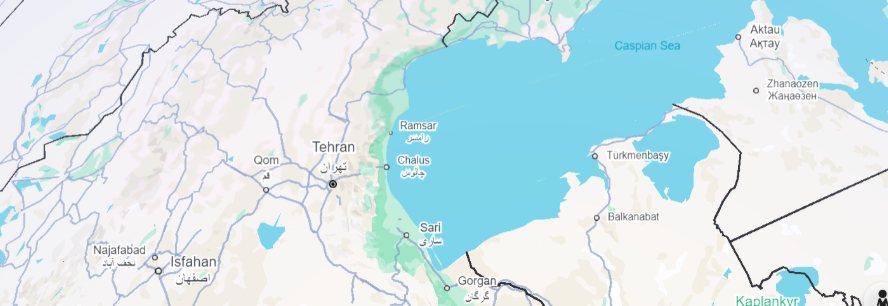
On 27 Sep 2026, retirees protested in Isfahan, Tehran and Shush over pensions that they say cover “only one week” of costs. Tabriz municipal drivers also protested over pay. At the same time, the free-market dollar reached about 234,480 tomans (+13.8% month on month). Tasnim reported that liquidity growth was 54.4% year on year in August. Separately, Parliament Speaker Ghalibaf challenged the cabinet’s emergency powers, and MP Rasaee said he had received a 10-month sentence. 

Claim Source Confidence 
Retiree protests in Isfahan (steel retirees), Tehran, Shush; Tabriz driver protest Article; protest videos not independently checked Medium 
Free-market USD about 234,480 tomans, +13.8% m/m Article (market rate, likely from bonbast-type trackers) Medium–High 
Liquidity growth 54.4% y/y in August Tasnim (IRGC-affiliated, so this is a regime source admitting it) High 
Ghalibaf letter to Pezeshkian disputing cabinet deadline extensions Article, citing Parliament Medium–High 
Rasaee 10-month sentence after a complaint by Ghalibaf Rasaee’s own speech in Parliament Medium–High 
Claims of a purge of other hardline MPs Sharyan Front, no evidence Low 

Source note: The article (by Mansoureh Galestan, 27 Sep 2026) appears to come from an Iranian-opposition-aligned outlet, so its framing should be treated as partisan. Its hard numbers come from Iranian state media and market rates. I have no live access to confirm them. 

2. Why it matters 

The protests continue a trend that is now getting worse. What is new is that economic anger and elite infighting are reinforcing each other while the state operates under wartime emergency rules. 

  • Currency collapse is speeding up: a 13.8% rise in the dollar means the rial lost about 12% of its value in one month. A month ago the rate was about 206,000 tomans. 
  • Money printing: liquidity growth of 54.4% is roughly double the 25–30% annual pace seen in 2023–25. That points to more inflation ahead, and Tasnim itself warns of it. This 2023–25 comparison is approximate and from my own knowledge. 
  • Fiscal strain on pensions: retirees are demanding that the government repay its debts to the Social Security Organization (SSO). The state is in effect funding itself by underpaying the pension fund. 
  • Elite split: the Speaker is challenging the President’s emergency powers, MPs are suing each other, and hardliners are protesting outside Rouhani’s home over his call for an “honorable” end to the war. A divided leadership is slower to respond with either concessions or a crackdown. 
  • Context gap: the article refers to a war and a wartime emergency in 2026. I have no reliable information on how that conflict developed after mid-2026, so verify its current status before using this alert. 

3. Market impact 

The only market move this event directly causes is in the Iranian rial. Global energy, freight and insurance markets react to Gulf military risk, not to pension protests. I could not check live prices, so the blanks below should be filled from Platts, Lloyd’s List or broker notes. 

Channel Impact from this event Number 
Iranian rial (free market) Direct 234,480 tomans/USD on 27 Sep; +13.8% m/m; about 12% loss of rial value 
Iranian money supply Direct Liquidity +54.4% y/y (Aug) 
Brent None from protests alone; a risk premium appears only if energy-sector strikes or Gulf military action follow 0% attributable; current Brent: ___ 
Iranian crude exports No disruption reported Kharg loadings (Kpler/Vortexa): ___ kb/d 
Gulf tanker freight (e.g., VLCC Middle East–China) None attributable Rate: ___; change since 27 Sep: ___% 
Gulf / Hormuz war-risk premium Driven by the war status, not by protests Hull %: ___ (check Lloyd’s Joint War Committee listed areas) 
Regional FX exposed to Iran trade Indirect: Iraqi dinar parallel rate, Afghan afghani, Armenian dram Negligible from this event 
Tehran Stock Exchange Likely nominal gains as the rial falls (an inflation hedge), real losses TEDPIX change: ___% 

4. Who is affected 

The groups most exposed are Iranian state-linked industrial employers and the SSO, plus foreign businesses that trade with Iran through sanctions-bypassing channels. Company names are examples of exposure, not reported effects. 

Group Direction Named examples Why 
Iranian steel producers Hit Mobarakeh Steel, Isfahan Steel (Zob Ahan) Retiree protests in Isfahan; wage and pension pressure on workers; rial-driven input costs 
Pension and social-security funds Hit Social Security Organization (SSO), Shasta (SSO’s investment holding), Steel Industry Pension Fund Government debts unpaid; pressure to sell holdings or raise payouts 
Iranian automakers and import-dependent manufacturers Hit Iran Khodro, SAIPA Parts imported in USD; weak rial raises costs 
Municipal services Hit Tabriz municipality contractors Wage protests by contract drivers 
Iranian exporters (rial-cost, USD-revenue) Relative benefit Petrochemical firms (e.g., Persian Gulf Petrochemical Industries Co.), copper (National Iranian Copper Industries) Weaker rial lowers local costs, but a strike risk exists 
Buyers of Iranian crude Watch Independent “teapot” refiners in Shandong, China Supply risk only if energy workers strike 
Iraqi power utilities Watch Iraq Ministry of Electricity (Iranian gas imports) Gas supply risk if Iran’s domestic crisis deepens in winter 
Re-export hubs and traders Payment and FX risk Dubai/Sharjah traders, Turkish and Iraqi Kurdish border traders, Armenian traders Rial collapse squeezes Iranian buyers’ ability to pay 

Geographies and trade lanes: Inside Iran: Tehran, Isfahan, Khuzestan (Shush; also, the oil province) and East Azerbaijan (Tabriz). Outside Iran: Bandar Abbas–Jebel Ali re-export trade, the Iran–Iraq land border (Bashmaq, Shalamcheh), the Iran–Turkey border (Bazargan–Gürbulak), and Kharg Island crude loadings to China. Supply chains at risk: Iranian steel billet and slab exports, petrochemicals (methanol, urea, polymers) to China, India and Turkey, and Iranian gas and electricity to Iraq. 

5. Scenarios (next 2–8 weeks) 

The base case is more of the same: rolling, localized protests with the rial weakening further. The tail risk worth planning for is strikes in the energy sector. Probabilities are analyst judgment. 

Scenario Trigger Probability Impact 
De-escalation Midyear wage rise announced; government pays part of its SSO debt; a war settlement or ceasefire lifts sentiment 20% Rial stabilizes at 210,000–235,000 tomans; protests shrink to weekly retiree gatherings 
Base case No wage review or a token one; liquidity stays above 50%; factional feuding continues 60% Rial drifts to 240,000–260,000 tomans; protests spread to more pension groups and municipal workers; no oil export disruption 
Escalation Strikes by contract workers in oil, gas or petrochemicals (Asaluyeh, Abadan refinery, Ahvaz) or bazaar closures; a security crackdown; a war flare-up 20% Rial above 280,000 tomans; possible hits to exports from South Pars petrochemicals and condensate; Gulf risk premium rises; internet shutdowns disrupt payments and trade 

6. Actions to consider 

Most non-Iranian firms should treat this as a monitoring event. The firms that should act now are those with sanctioned-trade exposure, Gulf energy exposure, or receivables from Iranian counterparties. 

Procurement 

  • Buyers of petrochemicals (methanol, urea, polyethylene) in Turkey, India and East Asia: identify a non-Iranian backup supplier, for example Saudi Arabia’s SABIC or Qatar’s Muntajat, for 4–6 weeks of volume in case South Pars strikes occur. 
  • Iraqi buyers of Iranian gas and power: confirm Qatari or Turkish backup arrangements ahead of winter demand. 

Logistics 

  • Traders shipping via Jebel Ali to Bandar Abbas: shorten credit terms and hold cargo until payment clears. 
  • Plan for possible internet or banking outages inside Iran by keeping offline copies of shipping and customs documents. 

Legal and compliance 

  • Screen counterparties against OFAC, EU and UK Iran sanctions lists. The article highlights “trustee” networks used for sanctions evasion, which are a common enforcement target. 
  • Check force-majeure clauses for “civil unrest” and “strike” wording, not only “war”. 
  • Confirm that political-risk and cargo cover does not exclude Iranian ports or the Gulf war-risk listed area. 

Finance 

  • Any rial-denominated exposure: assume a 10–15% further loss of value over 8 weeks in the base case, and 20%+ in escalation. 
  • Gulf-linked energy budgets: run a scenario with a USD 3–5/bbl risk premium in case Iranian energy-sector strikes occur.  

7. What to watch next 

The two signals that would change this assessment fastest are protests spreading to energy-sector workers and the rial passing 250,000 tomans. 

Indicator Who acts Inference 
Free-market USD rate (daily) Market, CBI Above 250,000 tomans = move toward High 
CBI interventions or new FX rules Central Bank of Iran Emergency FX auctions = the regime is losing control of the rate 
Midyear wage review decision Supreme Labour Council A real increase defuses protests; a delay or token rise feeds them 
SSO pension payments and government debt repayment Ministry of Labour, Plan and Budget Organization Repayment = de-escalation; missed or late pensions = escalation 
Strikes at Asaluyeh, Abadan, Ahvaz, Bandar Imam Contract oil, gas and petrochemical workers The key escalation trigger for markets 
Bazaar closures in Tehran, Tabriz, Isfahan Merchants Historically a sign of broad loss of confidence 
Ghalibaf–Pezeshkian dispute; judicial cases against MPs Majlis, judiciary, Supreme Leader’s office A ruling from the Leader’s office ends the dispute; continued fighting means policy paralysis 
War status and ceasefire diplomacy Government, SNSC, foreign mediators Settlement supports the rial; flare-up hits it and the Gulf risk premium 
Kharg Island loadings (satellite/AIS tracking) NIOC, tanker trackers A drop is the first hard sign of energy disruption 
Internet throttling (NetBlocks, Cloudflare Radar) Government Shutdowns usually come before or during crackdowns 

8. Bottom line 

The rial lost about 12% in a month, reaching 234,480 tomans per USD, and money supply is growing 54.4% a year. Retiree protests are spreading while Iran’s leaders fight among themselves. Oil markets are not affected yet; the 20% risk to watch is strikes by energy-sector workers. 

Sources 

  • Article by Mansoureh Galestan, 27 Sep 2026. It cites Tasnim for the liquidity figure and quotes Ghalibaf, Rasaee and the Sharyan Front. 
  • The comparison with 2023–25 liquidity growth and the background on Iran’s energy sector come from my training knowledge up to mid-2026, not from live sources.  
Indonesian Parliament Under the Garuda Dutch

Indonesia Presidential Candidacy Proposals Raise Alarm Over Court Ruling Violations – Political Risk Alert

ALERT LEVEL: ELEVATED (governance and policy-predictability risk; near-term market risk Low) · Indonesia · Reported Tue 29 Sep 2026, 20:51 WIB (Jakarta Post, dated 30 Sep) · House deliberations expected in October 2026 

Coalition parties are proposing a rule that would require at least 2 House parties behind every presidential ticket. That could undo, through the back door, the Constitutional Court’s January 2025 ruling that let every party nominate a candidate. 

1. What happened 

As the House and government prepare to revise the 2017 General Elections Law before the 2029 elections, parties in President Prabowo Subianto’s coalition have proposed new rules for presidential nominations. Experts warn the proposals may breach Constitutional Court (MK) rulings meant to widen competition.  

Item Detail 
Court ruling being implemented MK ruling, 2 Jan 2025: scrapped the 20% of House seats / 25% of national vote threshold to nominate a presidential ticket; every party has the right to nominate. The House and government may regulate nominations by other means, but not via seat or vote shares 
Proposal Each presidential ticket must be backed by at least 2 parties that hold House seats 
Backers NasDem (coalition member); Golkar, via secretary-general Sarmuji, who says it follows the court order 
Undecided Gerindra (Prabowo’s party) has not stated a position 
Timing Election Law revision deliberations to start “sometime in October”, per NasDem secretary-general Hermawi Taslim (29 Sep) 
Related Party leaders began election-law talks on 18 Sep and are weighing a higher parliamentary (legislative) threshold; small parties warned in May against a last-minute revision 
Critics Election experts and civil-society groups: the 2-party rule narrows choice and may face a fresh MK challenge 


2. Why it matters 

Continuation and escalation of a trend, not a one-off. It is the second coalition move this month to narrow electoral competition for 2029. On 15 to 16 Sep, Gerindra, Golkar and PKS backed raising the parliamentary threshold from 4% to 5%. On 11 Sep, 7 KIM Plus leaders met at the State Palace on a 130-page House Expertise Body study. That study listed adding presidential-nomination requirements and separating legislative and presidential election dates. 

  • The arithmetic narrows the 2029 field. Only 8 parties sit in the House (580 seats); 7 of them, holding 470 seats (81%), back Prabowo. A 2-House-party rule caps the field at 4 tickets in theory. In practice it means 1 coalition ticket plus at most 1 PDI-P-led ticket, and only if PDI-P (110 seats) can peel away a partner. Parties outside the House (e.g. PPP, PSI, Perindo) could not nominate at all, even though the January 2025 ruling gave them that right. 
  • It tests Indonesia’s courts. The MK said nominations may be regulated, but not by seat or vote share. Requiring House seats is arguably a seat-based test by another name. A House-government push against MK rulings repeats August 2024, when an attempt to override MK’s regional-election ruling triggered nationwide protests and was dropped within days. 
  • It feeds a wider governance narrative. It lands alongside reported recentralisation of fiscal and education powers and a Jakarta Post editorial on public discontent (22 Sep). For foreign investors the issue is not 2029 itself but policy predictability and checks on executive power under a supermajority. 

3. Market impact 

No market move can be pinned on this story alone; it lands on assets already under stress, adding a governance-risk premium. Stocks fell 7% in September with IDR 7.2 trillion of foreign selling, and 10-year yields hit 7.20%. 

Market Level Move Read-through 
Jakarta Composite Index (JCI) 6,071.14 (30 Sep close) -0.83% d/d; -6.96% in September; about -21% vs 7,710 on 5 Mar Fourth straight losing day; banks (BBRI, BBNI), Telkom (TLKM), Astra (ASII) led foreign selling in late September 
Foreign equity flows IDR 7.20 trillion net sell (1 to 29 Sep) About US$400m Governance headlines make it harder to win these flows back 
10-year SBN yield 7.20% (29 Sep) +21 bp m/m; +85 bp y/y Higher state funding cost for Prabowo’s spending programmes; political-risk premium is part of the spread 
USD/IDR 17,913 (25 Sep) -1.3% over 30 days; 2026 range 16,675 (1 Jan) to 18,175 (record weak) Bank Indonesia intervening; a governance shock could retest 18,175 
Sovereign rating Negative outlook since early Mar 2026 JCI fell 4.5% on the day of that decision Rating agencies weigh institutional checks; an override of MK rulings is a direct input 
Energy (Brent) About US$100/bbl (1 Oct) +57% y/y Not affected by this story, but it widens Indonesia’s fuel-subsidy bill and limits fiscal room 
Freight and war-risk insurance Not affected n/a Domestic political story; no shipping-lane effect 

4. Who is affected 

The direct losers are small and non-House parties and would-be challengers; the indirect losers are investors who price Indonesia on institutional checks. 

Group Named players Effect Direction 
Ruling coalition (KIM Plus) Gerindra, Golkar, NasDem, PKB, PKS, PAN, Demokrat (470 of 580 seats) Controls who can field a 2029 ticket; NasDem and Golkar on record in favour Benefits 
Opposition PDI-P (110 seats, largest party) Needs 1 House partner to nominate; all others are in the coalition Hit 
Non-House parties PPP, PSI, Perindo, Hanura and new parties Would lose the nomination right MK gave them in Jan 2025 Hit hard 
Potential independent-minded candidates Figures polling outside the coalition’s chosen ticket Fewer parties able to carry them Hit 
Constitutional Court and KPU MK, General Elections Commission Likely fresh judicial review; KPU rule-making delayed Institutional strain 
Banks and index heavyweights BRI (BBRI), BNI (BBNI), Bank Mandiri (BMRI), Telkom (TLKM), Astra (ASII) Most exposed to foreign-flow swings on governance headlines Negative 
Long-horizon foreign investors Nickel and battery (e.g. Vale Indonesia, Harita Nickel, IMIP tenants), data centres, power IPPs Regulatory predictability is the key risk, not the election rule itself Negative at the margin 
State investment vehicle Danantara (reportedly opening a Hong Kong office) Fundraising pitch rests on governance credibility Negative at the margin 

Geographies: national, with Jakarta (House, MK) as the decision centre; protest risk is highest in Jakarta, Yogyakarta, Bandung, Surabaya and Makassar, which saw large student protests in Aug 2024. 

Supply chains at risk: none directly. A repeat of August 2024-style protests would disrupt central Jakarta logistics and offices for days, not weeks. 

5. Scenarios (next 2 to 8 weeks, to late Nov 2026) 

The bill is unlikely to pass within 8 weeks; the window is about which drafts reach the House floor and how the street and markets react. Probabilities are our estimates. 

Scenario Trigger Probability Market signal Impact 
De-escalation Gerindra or Prabowo publicly rejects the 2-party rule; draft keeps open nominations; threshold stays at or below 5% 30% JCI recovers above 6,300; 10y yield back under 7.0% Governance premium fades; focus returns to fiscal and energy drivers 
Base case Proposal enters House drafts in October alongside a 5% threshold; slow committee debate; civil-society criticism, small protests; no final vote before 2027 50% JCI range 5,900 to 6,300; USD/IDR 17,800 to 18,100; foreign selling continues at a slower pace Uncertainty lingers into 2027; MK challenge prepared for when the law passes 
Escalation House fast-tracks the bill in a few sittings; MK rulings openly sidelined; large student protests as in Aug 2024 20% USD/IDR breaks 18,175 record; 10y yield above 7.5%; another JCI drop of 5% or more Rating-agency commentary, central Jakarta disruption, pressure on Bank Indonesia to intervene 

6. Actions to consider 

Treat this as a policy-predictability risk on Indonesia exposure: hedge IDR, stress-test for a retest of the 18,175 record, and build protest contingency for central Jakarta. 

Finance and treasury 

  • Hedge 50% to 75% of next-6-month IDR payables and receivables; budget a USD/IDR stress case of 18,500. 
  • Reprice IDR funding at a 10-year SBN of 7.2% to 7.5%; delay non-essential IDR bond issuance until after the October House sittings. 
  • For equity holders, cut overweight in foreign-flow-sensitive banks (BBRI, BBNI, BMRI) relative to domestic-demand and commodity exporters (e.g. PTBA, Chandra Asri, which saw foreign buying). 

Procurement and supply chain 

  • Lock IDR-denominated supplier contracts now with currency-adjustment clauses triggered above 18,000. 
  • Add 1 to 2 weeks of buffer stock for Jakarta-dependent distribution in case of multi-day protests. 

Legal and government relations 

  • Review stabilisation and change-in-law clauses in Indonesian concessions, licences and PPAs. 
  • Map exposure to permits that could be revisited after 2029 (mining IUPs, data-centre approvals, energy PPAs). 
  • Brief government-relations teams on each coalition party’s stated position; engage via chambers (AmCham, EuroCham, US-ASEAN Business Council) rather than directly on electoral rules. 

Operations and people 

  • Set protest triggers for staff near the House (Senayan), the MK (Medan Merdeka Barat) and the Palace: work from home, travel advisories, office closures. 

7. What to watch next 

The decisive signal is Gerindra: if Prabowo’s party endorses the 2-party rule, it passes; if it stays silent or opposes, the idea likely fades. 

Indicator Who / when Current reading Trigger and inference 
Gerindra position Sugiono, Dasco, Prabowo; October Silent on 2-party rule; backs 5% threshold Endorsement means escalation; rejection means de-escalation 
Bill tabled and fast-track signals House Commission II, Legislation Body (Baleg); October Deliberations expected “sometime in October” Bill passed in under 2 weeks or debated late at night mirrors Aug 2024 and signals escalation 
Election schedule split KIM Plus leaders, Expertise Body study Option to separate legislative and presidential votes on the table A split weakens MK’s simultaneity rulings and adds a second governance flashpoint 
PDI-P response Megawati, Hasto, PDI-P faction Proposed 5.5% to 6% threshold in May; no public word on the 2-party rule Opposition alignment with small parties raises the cost of passing it 
MK and legal community Constitutional Court, Perludem, ICW, law faculties Experts already warning Pre-emptive judicial review petitions show expected legal fight 
Street mobilisation BEM-SI student groups, labour unions Not yet Protest calls around House sittings: Aug 2024 repeat risk 
Foreign flows and yields IDX, DJPPR SBN auctions; weekly IDR 7.2 trillion equity outflow in Sep; 10y at 7.20% Weak SBN auction bid-to-cover or yields above 7.5% show governance risk being priced 
Rupiah Bank Indonesia; daily About 17,900 Break of 18,175 record forces bigger intervention 
Rating agencies S&P, Moody’s, Fitch comments Negative outlook since Mar 2026 Any reference to institutional checks moves the outlook toward a downgrade 

8. Bottom line 

Prabowo’s coalition (470 of 580 House seats) is weighing a rule requiring at least 2 House parties per presidential ticket, which could undo the Jan 2025 court ruling; it adds a governance premium to markets already down 7% in September, with 10-year yields at 7.20%. 

Sources 

(Party seat counts are from the 2024 election results.)  

Dusk Standoff at the Stone Building

France Student Protests Turn Violent, 440 Detained Amid Budget Strike – Civil Unrest Alert

School blockades merged with a public-sector strike against the 2027 draft budget. 440 people were detained and 48 police injured in one day, while Prime Minister Lecornu tries to pass spending cuts with no stable majority. 

1. What happened 

On Tue 29 Sep, teenagers blockaded about 400 of France’s roughly 3,700 secondary schools over class sizes, teacher shortages and long timetables. Clashes with police followed in several cities, while unions struck against the government’s budget plans.  

Item Detail 
Detentions 440 nationwide, two-thirds placed in police custody, most of them minors (Interior Minister Laurent Nuñez, BFM TV) 
Police injured 48; 7 cases of hydrochloric acid thrown at officers 
Schools affected About 400 of about 3,700 lycées (education ministry) 
Hotspots Paris (Lamartine, Colbert, Hélène Boucher lycées), Seine-Saint-Denis, Lille (bins burned, teargas), Lyon, Villeurbanne, Décines-Charpieu, Bordeaux, Rennes, Nantes, Marseille 
Student demands Classes of 32 to 35 pupils, staff shortages, 8am to 6pm timetables (Union Syndicale Lycéenne, president Ryad Rani) 
Parallel strike Public-sector unions struck against the budget; about 40% of primary teachers stopped work per unions (FSU, Caroline Chevé); the ministry put strikers at just over 11% of all teachers and staff. CGT leader Sophie Binet gave the government 48 hours to drop the cuts before further action 
Budget figure €54 billion of 2027 savings (the Guardian’s “€54m” is a typo; €54bn is confirmed by France 24, Reuters and Bloomberg). Includes a 4th straight freeze on civil-servant base pay (saves €2bn), pension savings and sick-leave changes 
Political fight PM Sébastien Lecornu called escalation “irresponsible”; LFI leader Jean-Luc Mélenchon accused the government of a racist crackdown and urged activists to step in 
Policing A joint interior and education ministry circular ordered “proportionate use of force” outside schools; the student union called it a scandal 


2. Why it matters 

Escalation of an established pattern. It is the second autumn in a row in which a deficit-cutting budget has met strikes and street action. In 2025, the “Bloquons tout” movement of 10 Sep and the union strikes of 18 Sep followed Bayrou’s €44bn plan; Bayrou then lost a confidence vote and was replaced by Lecornu. New this year: minors are the main front line, police violence is now a political issue, and the presidential election is only 7 months away (April 2027). 

  • The budget is at stake, not just school policy. Lecornu presents the 2027 budget to cabinet on 1 Oct; the bill must reach the National Assembly by 6 Oct. Without the €54bn of savings, the deficit would approach 6.5% of GDP; with them, the target is 5.0% (4.8% excluding defence). Debt is near 120% of GDP, and interest costs rise by about €10bn next year. 
  • The government has no majority. Socialists call the plan a “bitter austerity potion”. Any concession to students, teachers or unions widens the deficit; any refusal raises the risk of censure. Lecornu could fall the way Bayrou did. 
  • Unrest is becoming politicised. Mélenchon (LFI) is calling on activists to join the school blockades, and a Seine-Saint-Denis mayor joined one. That extends the protests from schools into the 2027 campaign. 
  • Growth is weaker than planned. France will grow less than expected in 2026, so each euro of savings is harder to find and each concession costs more. 

3. Market impact 

The protests themselves do not move markets; the budget they target does. French 10-year debt now yields more than 4.8% and pays a 111bp premium over Germany, double the January level. Unrest that forces concessions or topples Lecornu widens it further. 

Market Level Move Read-through 
10-year OAT/Bund spread 111.2 bp (29 Sep) +5.8 bp d/d; about 55 bp in Jan 2026 and 86 bp in late Aug ING sees 100 to 125 bp in coming months; above 120 bp signals a political-fiscal break 
10-year OAT yield 4.83% (30 Sep) +65 bp m/m; +130 bp y/y; highest since 2008 France now yields more than Italy’s BTP; each 100 bp adds billions to annual interest over time 
30-year OAT yield 5.44% (30 Sep) +108 bp y/y Long-end pressure hits insurers and pension holders of OATs 
2027 borrowing Record €310bn issuance programme (2026) Debt near 120% of GDP; deficit 5.4% in 2026 Interest bill up about €10bn in 2027 
CAC 40 About 8,130 (18 Sep); 13-week low 8,141 on 10 Sep -6.6% over 4 weeks to 10 Sep Banks and domestic-exposed names most sensitive to OAT spread 
EUR/USD 1.128 (1 Oct) -0.5% d/d on broad dollar strength France is a euro-area drag, not a euro driver unless the spread passes 150 bp 
Sovereign ratings Moody’s Aa3, negative outlook Fitch reviewed France on 28 Aug A downgrade during budget turmoil would push the spread past 120 bp 
Energy, freight, insurance Not directly affected n/a Domestic unrest; ports and refineries not yet in the strike call (see section 7) 

4. Who is affected 

French banks and OAT holders carry the market risk; urban retail, transport and anyone running operations near lycées carry the street risk. 

Group Named players Effect Direction 
French banks BNP Paribas, Société Générale, Crédit Agricole Large OAT holdings; share prices track the OAT/Bund spread Hit 
Insurers and asset managers AXA, CNP Assurances, Amundi Mark-to-market losses on long OATs; 30-year at 5.44% Hit (but higher yields help new money) 
Urban retail and hospitality Carrefour, Casino, Fnac Darty, Accor; city-centre shops in Paris, Lille, Lyon Footfall drops on protest days; window and property damage risk Hit on protest days 
Public transport and outdoor advertising RATP, SNCF, Keolis, Transdev; JCDecaux (bus shelters vandalised in Lille) Service cuts on strike days; repair costs Hit 
Construction and public contractors Vinci, Eiffage, Bouygues Public capex cuts in a €54bn savings budget Negative 
Education and public sector 12 million pupils, about 850,000 teachers; FSU, CGT, SNES, USL Pay freeze (4th year), staff shortages, class sizes of 32 to 35 Hit 
Euro-area peers Italy BTP, Belgium OLO Contagion if the OAT spread jumps; Italy already trades tighter than France Mild negative 
Defence Thales, Dassault Aviation, Safran Defence is ring-fenced (deficit target 4.8% excluding defence) Protected 

Geographies: Paris and Seine-Saint-Denis; Lille (worst violence); Lyon and its suburbs (Villeurbanne, Décines-Charpieu); Bordeaux, Rennes, Nantes, Marseille. 

Supply chains at risk: none yet. Risk rises if the CGT widens action to refineries (TotalEnergies), ports (Le Havre, Marseille-Fos) or rail freight, as in past budget and pension fights. 

5. Scenarios (next 2 to 8 weeks, to late Nov 2026) 

The trigger window is the budget’s first reading: cabinet on 1 Oct, filing by 6 Oct, Assembly debate through October and November. The October half-term (about 17 Oct to 2 Nov) naturally pauses school blockades. Probabilities are our estimates. 

Scenario Trigger Probability OAT/Bund spread Impact 
De-escalation Government offers targeted education measures (smaller classes in priority zones, staffing hires); policing eases; half-term cools blockades; PS abstains rather than censures 25% Back to 90 to 100 bp Budget passes first reading with tweaks; protests fade to one-day union actions 
Base case Rolling union strike days after CGT’s 48-hour ultimatum; sporadic lycée blockades before and after half-term; budget debated amid partial concessions that trim savings to about €45bn to €50bn 50% 105 to 125 bp Deficit target slips toward 5.2% to 5.4%; ratings pressure; city-centre disruption 1 to 2 days a week 
Escalation A serious injury or death of a minor in a police clash; LFI-led mobilisation; PS joins a censure motion; Lecornu falls or the budget is pushed into a stop-gap “special law” 25% Above 125 bp, possible test of 150 bp Repeat of Bayrou’s fall in 2025; budget delayed into 2027; refinery or port strikes; rating downgrade risk 

6. Actions to consider 

Plan for a weekly strike-day rhythm in French cities through November, and hedge for the OAT/Bund spread passing 125 bp if the budget or the government breaks. 

Finance and treasury 

  • Stress-test French exposures at a 150 bp OAT/Bund spread and a one-notch rating downgrade; cap new long-dated OAT buying until the first reading passes. 
  • Lock euro funding for French entities now; French bank credit spreads widen with the OAT spread. 
  • If you sell to the French state or municipalities, model 5% to 10% lower 2027 public contract volumes and slower payment. 

Operations and people 

  • Track union strike calendars (CGT, FSU, SNES) and the student union USL; set a work-from-home trigger for staff in Paris, Lille and Lyon on announced days. 
  • Avoid scheduling deliveries, events or store activations near lycées in Paris (north and east), Seine-Saint-Denis, Lille, Lyon and Villeurbanne on school-blockade mornings. 
  • Review property insurance and security for street-level sites (shopfronts, advertising panels, bus shelters) in hotspot cities. 

Logistics and supply chain 

  • Add 3 to 5 days of buffer for France-routed freight in case strikes widen to SNCF freight, Le Havre or Marseille-Fos. 
  • Pre-book alternative routing via Antwerp, Rotterdam or Barcelona for time-critical cargo. 

Legal 

  • Check whether strikes and civil unrest count as force majeure in French supply and service contracts; send notices early if delays occur. 
  • For multinationals with French workforces, prepare for unions to reopen pay talks if the civil-service pay freeze passes. 

7. What to watch next 

The decisive signal is the Socialist Party: if it signals it will back a censure motion, Lecornu’s government and the €54bn plan are in real danger. 

Indicator Who / when Current reading Trigger and inference 
Budget unveiling Cabinet, 1 Oct; filing deadline 6 Oct €54bn savings; deficit target 5.0% Any added education money signals concession; a bigger savings figure signals confrontation 
CGT ultimatum Sophie Binet; 48 hours from 29 Sep Expired around 1 Oct Inter-union call for a national strike day = base case confirmed; renewable strikes = escalation 
School blockades USL, interior ministry tallies; daily About 400 of 3,700 lycées hit; 440 detained on 29 Sep Over 500 schools or a serious injury = escalation; under 100 = fading 
Policing and politics Interior Minister Nuñez, LFI, Défenseur des droits Circular on “proportionate force”; Mélenchon accusing racism An IGPN probe or viral video of abuse would widen protests 
Socialist Party stance PS group in National Assembly; October Called the plan “bitter austerity potion” Threat to back censure = high risk to Lecornu 
OAT/Bund spread Daily 111 bp Above 125 bp = markets pricing a government fall 
Rating actions Moody’s, S&P, Fitch Moody’s Aa3 negative Any downgrade during the debate accelerates the spread move 
Sector strikes beyond schools SNCF, RATP, refineries, ports Public-sector and firefighters only so far Refinery or port strike calls = supply-chain risk 
Opinion polls Ifop, Elabe; weekly Government and Macron deeply unpopular Majority public support for students raises pressure to concede 

8. Bottom line 

France saw 440 detentions and protests at about 400 of its 3,700 lycées in one day, merging with strikes against a €54bn austerity budget. With the OAT/Bund spread at 111 bp and no majority, a government fall would push it past 125 bp. 

Sources 

Night Cargo Route_ Pakistan to Bangladesh

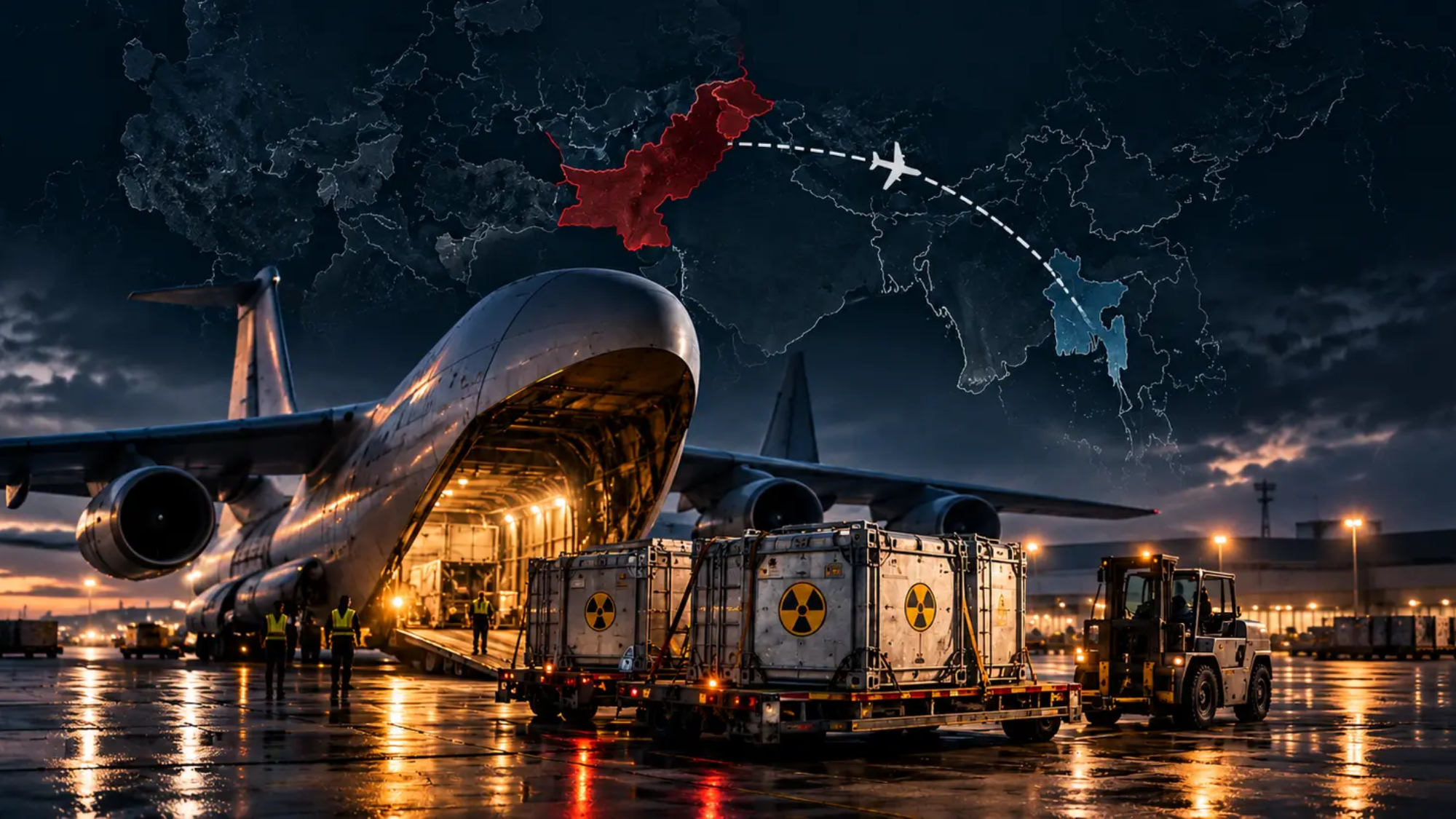
Pakistan Blocks Airspace for Russian Flight Carrying Bangladesh’s Rooppur Nuclear Fuel – Energy & Geopolitical Alert

ALERT LEVEL: ELEVATED  

Pakistan refused overflight to a Rosatom cargo flight carrying the first fuel batch for Rooppur Unit-2. The delay is likely short, since Rosatom says shipments resume in October via another route. But it lands in Bangladesh’s worst power crisis in decades and dents the Dhaka–Islamabad rapprochement. 

1. What happened 

A Russian flight carrying nuclear fuel for Unit-2 of Bangladesh’s Rooppur Nuclear Power Plant, due in Dhaka on 24 Sep, was not given Pakistani airspace clearance at the last minute. Rosatom has rerouted the delivery and says fuel shipments resume in October with no schedule impact.  

Item Detail 
Cargo First fuel batch for Rooppur Unit-2 (Rosatom supplies the uranium fuel) 
Planned route Russia, then Azerbaijan, Kazakhstan, Pakistan, India, Dhaka 
Planned arrival 24 Sep 2026; airport preparations complete when Rosatom reported no clearance 
Bangladesh position Science & Technology Minister Faqir Mahbub Anam confirmed the denial; no reason received. BAEC silent on which country refused 
Pakistan position High Commission in Dhaka cites “technical” and “procedural issues”; asks that the matter not be over-read 
Diplomacy Pakistan High Commissioner Imran Haider met Junior Foreign Minister Humaiun Kobir on Mon 28 Sep; the airspace issue was “not discussed” 
Rosatom plan Alternative route; remaining fuel to arrive by December on 7 separate cargo flights; “schedule won’t be impacted” 
Plant status Unit-1 fuel loaded Apr 2026; final tests from Aug; about 300 MW trial power to the grid in October; commercial operation targeted for December; 2 units total 2,400 MW 
Context Bangladesh’s worst power crisis in decades for 2+ months: 10 to 16 hours of rural load-shedding; garment, food, ceramics and pharma factories cutting output; first major test for the Tarique Rahman government 


2. Why it matters 

A new irritant inside a worsening trend. The airspace refusal itself is a one-off logistics setback. It matters because it hits the one project Bangladesh is counting on to ease a gas-driven power crisis. It also exposes how fragile its new tilt toward Pakistan is. 

  • Rooppur is Bangladesh’s main structural fix. Gas demand for power is about 3,800 million cubic feet a day (MMcfd), but July to August supply was about half that. Load-shedding peaked above 3,500 MW, and contracted LNG imports largely stopped after the Iran war closed Hormuz. Rooppur’s 300 MW trial in October covers under 10% of that shortfall, and the full 2,400 MW covers most of it once both units run. 
  • The fuel route is a choke point. Russian nuclear fuel is flown to Dhaka over third countries. Radioactive (Class 7) air cargo needs specific overflight approval from each state crossed. One refusal reroutes the whole chain, and Rosatom now needs 7 more flights by December. 
  • The Dhaka–Islamabad thaw is tested. Since 2024, Dhaka has courted Islamabad. Pakistan’s “technical” explanation and a High Commission meeting that skipped the topic suggest both sides want to contain it. The episode still hands critics a ready example. Pakistan–India airspace restrictions in place since 2025 may also have complicated a route that crossed both countries; that link is our inference, not confirmed. 
  • The political clock is short. The crisis is the Tarique Rahman government’s first major test. Any slip in Rooppur’s October trial or December commercial date would deepen public anger. 

3. Market impact 

The fuel delay itself has no direct market price. What it threatens is the timing of relief for a power grid short by up to 3,500 MW while spot LNG costs about 2.3 times last year’s level. 

Market Level Move Read-through 
Asian spot LNG (JKM) US$25.74/MMBtu (30 Sep) +13% m/m; +133% y/y Bangladesh buys spot cargoes at these prices because contracted Qatari supply is disrupted; every MW Rooppur adds cuts LNG demand 
Bangladesh gas supply About 2,650 MMcfd total (1,698 domestic, 952 LNG), against about 3,800 demand Domestic output falling for 9 years (2,700 in 2018 to under 1,700 now) Structural deficit; 2 floating LNG terminals, each a single point of failure 
Power shortfall Load-shedding up to 3,500 MW; peak 3,000 MW+ in Aug Gas supply at a 16-year low in Jul to Aug Rooppur trial of 300 MW in Oct covers under 10%; full 2,400 MW covers most of the gap 
Garment output About 40% of normal capacity at the August low (BGMEA); estimates of 30% to 40% cuts BGMEA sought 1 to 2 week shipment extensions Delivery risk for Q4 holiday orders 
Export earnings (EPB) Aug 2026: US$4.42bn total, RMG US$3.60bn +13.1% y/y (RMG +13.9%) after -0.9% in July Shipments are holding so far on buffer stock and generators; September data (due early Oct) is the test 
RMG exports to US US$1.61bn Jul to Aug +11.4% y/y US buyers (Walmart, Gap, H&M, Zara) still placing orders despite the crisis 
Freight and war-risk insurance Not directly affected n/a Rosatom air cargo is rerouted; no sea-lane effect 

4. Who is affected 

Bangladesh’s garment exporters and their global buyers carry the cost of any Rooppur slip; Indian power exporters and LNG sellers gain from a longer crisis. 

Group Named players Effect Direction 
Nuclear project Rosatom (contractor and fuel supplier), Bangladesh Atomic Energy Commission (BAEC), Nuclear Power Plant Company Bangladesh Rerouting cost; 7 more fuel flights needed by December; reputational test Mild negative 
Garment and textile exporters BGMEA and BKMEA members; dyeing and knitting hubs in Narayanganj, Gazipur, Savar, Chattogram Output cut by up to 60% at the low; generator diesel costs; late shipments Hit 
Global apparel buyers Walmart, H&M, Inditex (Zara), Gap, Primark, VF Corp, American Eagle Q4 holiday delivery risk; extra air freight Hit 
Other gas-dependent industry Ceramics (RAK Ceramics BD), pharma (Square, Beximco), food processing, shrimp (Khulna) Production cuts reported Hit 
Power utilities Bangladesh Power Development Board, PGCB, Petrobangla, RPGCL Higher spot LNG bills, subsidy burden Hit 
Electricity exporters Adani Power (Godda plant, Jharkhand), Indian grid exports via NVVN and PTC Bangladesh leans more on Indian power while Rooppur is delayed Benefit 
LNG suppliers Spot sellers and traders; floating terminal operators Excelerate Energy and Summit LNG More spot demand, at high prices Benefit 
Pakistan–Bangladesh ties Islamabad; Dhaka’s Foreign Ministry Rapprochement since 2024 dented; Pakistan stresses “technical” cause Strained 

Geographies and routes: fuel airlift from Russia via Azerbaijan and Kazakhstan; Pakistani and Indian airspace on the original plan; Rooppur, Pabna district, on the Padma River. 

Supply chains at risk: apparel from Bangladesh (about 84% of exports) to the US, EU and UK; garment inputs (dyed fabric) that need gas; rural agriculture (irrigation pumps) during load-shedding. 

5. Scenarios (next 2 to 8 weeks, to late Nov 2026) 

Unit-1 already has fuel loaded, so the October trial does not depend on this shipment; the Unit-2 timeline and political trust do. Probabilities are our estimates. 

Scenario Trigger Probability Rooppur outcome Impact 
De-escalation Rosatom flies Unit-2 fuel via an alternative route in October; Pakistan grants clearance for later flights or the issue fades; Hormuz LNG flows keep recovering 45% Unit-1 300 MW trial in Oct; commercial operation in Dec on schedule Load-shedding eases toward 1,000 to 2,000 MW as winter cuts demand; garment output recovers 
Base case Fuel flights proceed via a longer route; minor slippage; Unit-1 trial slips 2 to 4 weeks for technical reasons unrelated to fuel 40% Trial in Nov; commercial operation in Jan 2027 Crisis lingers through November; export shipments slip 1 to 2 weeks; political pressure on Dhaka builds 
Escalation Further overflight denials (another state joins); sanctions or payment problems on Russian deliveries; an LNG terminal outage 15% Unit-2 fuel delayed into 2027; Unit-1 commercial date at risk Load-shedding back above 3,000 MW; buyer order shifts to Vietnam, India and Cambodia; strain in Pakistan–Bangladesh ties 

6. Actions to consider 

Assume Bangladesh power relief arrives no earlier than December. Plan Q4 apparel sourcing with 1 to 2 weeks of slack and a second source for priority lines. 

Procurement (apparel and textile buyers) 

  • Ask Bangladeshi suppliers for factory-level energy status (grid hours, captive gas, generator coverage) and weekly output against plan through December. 
  • Pull Q4 holiday orders forward 1 to 2 weeks or split 15% to 25% of volume to Vietnam, India or Cambodia for critical styles. 
  • Accept partial air freight for late lines where margins allow; pre-book Dhaka air capacity, which tightens when sea shipments slip. 

Logistics 

  • Add 7 to 14 days of buffer to Chattogram departures for November and December deliveries. 
  • Track the BGMEA requests for shipment extensions; agree revised dates in writing. 

Legal 

  • Check whether power outages caused by fuel shortages count as force majeure in your supplier contracts; document notices from suppliers now. 

Finance and energy 

  • For businesses in Bangladesh, budget for generator diesel and higher grid tariffs (LNG bought at about US$26/MMBtu) through Q1 2027. 
  • For investors in Indian power exporters (Adani Power) and LNG shippers, treat any Rooppur slippage as a short-term demand upside. 

7. What to watch next 

The decisive signal is the Rooppur Unit-1 grid synchronisation in October: 300 MW reaching the grid on time means the airspace issue was a sideshow; a slip shifts relief into 2027. 

Indicator Who / when Current reading Trigger and inference 
Rooppur Unit-1 trial power BAEC, Rosatom; October About 300 MW trial planned Grid sync by end-Oct = on track; slip past Nov = commercial date at risk 
Unit-2 fuel flights Rosatom; Oct to Dec First batch rerouted; 7 flights to go Each arrival confirmed = de-escalation; another denial = escalation 
Pakistan stance Pakistan High Commission, Foreign Office “Technical, procedural” Clearance granted for later flights = issue closed; silence or further denials = political signal 
Dhaka response Bangladesh Foreign and Science ministries Not formally raised A formal protest = rapprochement under strain 
Load-shedding PGCB daily data Up to 3,500 MW at peak Below 1,500 MW in Nov = crisis easing (winter demand) 
LNG supply Petrobangla, RPGCL tenders; QatarEnergy force majeure Contract cargoes largely halted; spot JKM US$25.74 Qatari cargo resumption = biggest relief; terminal outage = escalation 
September exports EPB; early October Aug +13.1% y/y A y/y fall = crisis now hitting shipments 
Hormuz and Iran talks US-Iran negotiations; Kpler flow data Hormuz flows about 77% of pre-war A deal reopening Hormuz cuts LNG prices and eases Bangladesh’s crisis faster than Rooppur 

8. Bottom line 

Pakistan’s airspace refusal delays Rooppur Unit-2 fuel, but Rosatom says 7 rerouted flights by December keep the schedule. The real risk is Unit-1’s 300 MW October trial: Bangladesh is short up to 3,500 MW and garment output fell to about 40% of capacity. 

Sources 

Night Flight Across the Map

Flydubai Pilot Hijack Attempt on Dubai–Tel Aviv Flight Foiled, UAE–Israel Flights Halted – Aviation Security Alert

ALERT LEVEL: HIGH  

An airline’s own first officer tried to crash a passenger jet bound for Israel. Israel is moving to suspend UAE–Israel flights, and flydubai has halted all Israel flights. The main UAE–Israel air link is now shut while an insider-threat gap is probed. 

1. What happened 

On flydubai flight FZ1073 from Dubai to Tel Aviv, the Omani first officer stabbed the Indian captain and tried to crash the Boeing 737-8 MAX. Passengers subdued and tied him up, and a positioning crew landed the jet at Tabuk, Saudi Arabia. Israeli security agencies currently see a lone-wolf act.  

Item Detail 
Flight flydubai FZ1073, Dubai to Tel Aviv, Boeing 737-8 MAX 
People on board 174 passengers (166 Israelis per Israeli media; 4 US-Israeli dual nationals per US officials) 
Attacker First officer, Omani national; stabbed the captain with a weapon carried into the cockpit 
Captain Indian national (named as Smit Machchhar in other reports); critical, then reported stable in Saudi Arabia; opened the cockpit to passengers despite wounds 
Who stopped it Up to 4 passengers restrained the attacker; a passenger medic treated the captain; extra crew on board landed the aircraft 
Flight path Dropped about 4,000 m (about 13,000 ft) per an Israeli official; other outlets cite 17,000 ft; squawked 7700 (emergency), then 7500 (hijack), then back 
Diversion Prince Sultan bin Abdulaziz Airport, Tabuk, Saudi Arabia; about 6 hours on the ground 
Israeli response Air force scrambled jets; Israeli airspace briefly closed; IDF chief Zamir cancelled a US trip 
Repatriation Saudi Arabia refused an Israeli air force or El Al aircraft (even unmarked); passengers flown home on a second flydubai jet with a Mossad-vetted crew 
Flights halted flydubai halted all flights to Israel; Israel moving to a temporary UAE–Israel flight ban, pushed by Shin Bet chief David Zini and endorsed by Transport Minister Miri Regev. Emirates suspended its flydubai codeshare to Tel Aviv with immediate effect and will not accept passengers ending in Tel Aviv. No resumption date 
Open questions Why the pilot was not screened for a weapon; why an Omani crew member was rostered on an Israel flight despite UAE-Israel agreements; whether he aimed for an Israeli city. The UAE Attorney General has ordered a team to examine motives, any terror link and prior planning; the GCAA is reviewing operational and security aspects 


2. Why it matters 

New type of threat on an established route. Gulf-Israel flights have been disrupted before by war, missile threats and a 2025 medical diversion to Riyadh. This is the first known case of an airline’s own flight-deck crew attacking an Israel-bound jet. That changes the risk model: cockpit doors and passenger screening do not protect against an insider pilot. 

  • It cuts the main Abraham Accords air link. Dubai–Tel Aviv is the busiest UAE–Israel route and a symbol of normalisation since 2020. flydubai has stopped flying it, Emirates has stopped selling it, and Israel’s security agencies want a temporary ban on all UAE–Israel flights. 
  • It exposes a crew-vetting gap. UAE–Israel arrangements reportedly bar some nationalities, including Omanis, from crewing Israel flights. That an Omani first officer flew one, armed, points to rostering and screening failures at the airline or in the bilateral regime. 
  • It shows the limits of Saudi normalisation. Saudi Arabia handled the diversion and the suspect but refused any Israeli aircraft, even unmarked, and now controls the interrogation. A Saudi source said normalisation “cannot be forced”. 
  • It feeds Israeli domestic politics and security posture. Netanyahu used the rescue publicly; the IDF chief cancelled a US trip. The incident lands in a region already strained by the US-Iran conflict and Hormuz disruption. 

3. Market impact 

The direct UAE–Israel market has collapsed to a single carrier, Etihad. Investors are pricing a demand shift to Israeli airlines: El Al +7.9% to a record and Israir +8.8% on 30 Sep, on 3.5 times normal volume. 

Market Level Move Read-through 
El Al (TASE: ELAL) 1,850 agorot (30 Sep); 1,907 intraday 1 Oct +7.9% on 30 Sep; +3.1% on 1 Oct; low of about 1,200 in Mar to Aug Record valuation, about NIS 10bn market cap; gains if Israeli carriers regain the Dubai route 
Israir (TASE) NIS 1.58 (30 Sep) +8.8%; had fallen from 1.60 (9 Sep) to 1.44 (29 Sep) Same bet; Arkia’s CEO is lobbying to lift the ban on Israeli carriers to Dubai 
UAE–Israel capacity flydubai: 0 (suspended); Emirates codeshare: 0; Israeli carriers: barred until at least end-Oct Etihad (Abu Dhabi) the only scheduled operator, itself hit by a Ben Gurion workers’ strike Seat shortage and fare spike on Gulf connections; traffic shifts to Etihad, Royal Jordanian, Egyptair, Turkish and European hubs 
flydubai and Emirates Unlisted (Dubai state-owned) Direct revenue hit on Tel Aviv, flydubai’s flagship Israel route Reputational and regulatory cost; GCAA crew and security review 
Boeing 737-8 MAX Aircraft not at fault No market effect Rudder damage photographed; airworthiness is not the issue 
Aviation war-risk and liability insurance No public quote change yet n/a Expect underwriters to ask about crew vetting and nationality rules on Israel routes 
Energy, freight, FX Not directly affected n/a Brent about US$100/bbl reflects the wider US-Iran conflict, not this incident 

4. Who is affected 

Gulf carriers on Israel routes lose; Israeli carriers and third-country hubs gain; business travel between Israel and the Gulf is the main casualty. 

Group Named players Effect Direction 
UAE carriers flydubai (suspended), Emirates (codeshare suspended), Etihad (still flying, strike-hit) Lost Tel Aviv revenue; crew-vetting and security review; possible Israeli conditions to resume Hit 
Israeli carriers El Al, Israir, Arkia Barred from the UAE since “Operation Roaring Lion” pending security deals; suspension runs to end-Oct, possibly November; now lobbying to replace flydubai Benefit if allowed back 
Third-country hubs Etihad (Abu Dhabi), Royal Jordanian (Amman), Egyptair (Cairo), Turkish Airlines, European carriers Absorb rerouted Israel–Gulf–Asia traffic Benefit 
Airports Dubai International (DXB), Ben Gurion (TLV), Tabuk (Saudi Arabia) Lost DXB–TLV slots; TLV already strained by strikes Mixed 
Business travel and trade Israeli tech firms with Gulf offices; DMCC and Dubai diamond trade; Israeli defence and cyber firms selling in the UAE Longer, costlier trips via Abu Dhabi or Amman; some deal travel postponed Hit 
Tourism Israeli tour operators selling Dubai packages (Issta, Ophir Tours); Dubai hotels Holiday bookings cancelled or rerouted Hit 
Saudi-Israel normalisation track Riyadh, Jerusalem, Washington Saudi refusal to host Israeli aircraft shows its limits Negative 
Insurers and aviation security vendors Lloyd’s aviation war-risk market; crew-screening and insider-threat vendors Higher underwriting scrutiny; demand for pilot vetting and monitoring Mixed 

Geographies and routes: Dubai–Tel Aviv (suspended); Abu Dhabi–Tel Aviv (Etihad only); Saudi and Jordanian overflight corridors used by Israel-bound Gulf flights. 

Supply chains at risk: belly cargo on DXB–TLV (pharma, tech parts, diamonds, fresh produce) moves to Etihad Cargo or via Europe, adding 1 to 3 days. 

5. Scenarios (next 2 to 8 weeks, to late Nov 2026) 

Resumption depends on two things: the UAE–Saudi–Israeli finding on motive, and a new crew-vetting regime acceptable to Shin Bet. Probabilities are our estimates. 

Scenario Trigger Probability Route status Impact 
De-escalation Lone-wolf finding confirmed; UAE agrees to nationality and vetting rules for Israel-route crews (Israel input on crew lists, cockpit weapons checks); Israeli carriers allowed back to Dubai 30% flydubai and Emirates resume within 3 to 6 weeks; El Al, Israir and Arkia return to Dubai Fares normalise; El Al’s gain partly reverses as competition returns 
Base case Investigation drags; Israel keeps UAE carriers suspended but lets Israeli carriers fly to Dubai under new security terms from November 50% DXB–TLV served only by Israeli carriers; Etihad continues to Abu Dhabi Israeli airlines gain share and pricing power; Gulf-Israel business travel costs rise 20% to 40% (our estimate) 
Escalation Evidence of direction by Iran or a militant group, or a copycat insider incident; Israel suspends all Gulf-carrier flights 20% Etihad also suspended; Israeli carriers limited; overflight permissions questioned Abraham Accords air links frozen; insurers reprice Israel-route war risk; normalisation talks with Riyadh set back 

6. Actions to consider 

Assume no direct Dubai–Tel Aviv service for at least 4 to 6 weeks; rebook staff and cargo via Abu Dhabi or third-country hubs now, before fares climb. 

Travel and people 

  • Rebook all staff on flydubai or Emirates DXB–TLV tickets onto Etihad (AUH–TLV), Royal Jordanian via Amman, or Turkish or European carriers; claim refunds or vouchers on the suspended sectors. 
  • Add 1 day of buffer to Israel–Gulf business trips; pre-arrange Abu Dhabi ground transfers for Dubai meetings. 
  • Update travel-risk guidance: for Israel-route flights on Gulf carriers, assess crew-vetting status, not only airspace risk. 

Logistics 

  • Move time-critical belly cargo from DXB–TLV to Etihad Cargo or via European hubs; check whether forwarders have already re-routed and what the surcharge is. 
  • For diamond and high-value shipments between Dubai and Ramat Gan, confirm insurer approval of the new routing and any extra transit stop. 

Legal and insurance 

  • Check corporate travel and cargo policies for exclusions on routes suspended by government order; notify insurers of route changes. 
  • Review supplier and event contracts relying on DXB–TLV travel for force majeure cover of government-ordered flight suspensions. 

Investors 

  • Treat the El Al and Israir rally as event-driven: it depends on Israeli carriers regaining Dubai access. Set exit triggers around the Israel-UAE security agreement announcement. 

7. What to watch next 

The decisive signal is the motive finding from the Saudi interrogation and the UAE Attorney General’s team: “lone wolf” opens a path to resumption, while any external link freezes the corridor. 

Indicator Who / when Current reading Trigger and inference 
Motive and links Saudi interrogators; UAE Attorney General Hamad Al Shamsi’s team; Mossad, Shin Bet Israeli agencies lean to “lone wolf” An Iran or militant link = escalation scenario 
Israeli flight ban decision Shin Bet (Zini), Transport Minister Regev, cabinet; days Recommendation to suspend UAE–Israel flights A formal ban covering Etihad = escalation; flydubai-only = base case 
Israeli carriers to Dubai Israel Civil Aviation Authority, UAE GCAA Barred to end-Oct, possibly November A signed security arrangement = El Al, Israir and Arkia resume; watch their share prices 
flydubai and Emirates resumption notices Airline statements Suspended, no date A date announced = de-escalation 
Crew-vetting rule changes GCAA, Israel CAA, ICAO and IATA guidance Under review Nationality rules, pre-flight weapons checks or two-person cockpit rules on Israel routes 
Saudi posture Riyadh statements, overflight permissions Refused Israeli aircraft landing Any tightening of overflight for Israel-bound flights = route cost up 
Israeli political use Netanyahu, coalition; election season Met passengers on return Escalation in rhetoric against the UAE or Saudi Arabia = slower normalisation 
Copycat or insider threats Global aviation security bulletins None reported Any similar case elsewhere = global crew-screening tightening 

8. Bottom line 

An armed flydubai first officer tried to crash a jet carrying 174 people to Tel Aviv. Dubai–Tel Aviv flights are now suspended with no restart date, leaving Etihad the only UAE–Israel carrier. El Al rose 7.9% to a record on the shift in demand. 

Sources 

Singapore’s Energy Shock Is Now Hitting Commuters

Singapore Bus & Train Fares to Rise up to 13 Cents from Dec 26 – Energy Price Alert

ALERT LEVEL: ELEVATED · Singapore (domestic cost pass-through of Middle East energy shock) · Announced Tue 29 Sep 2026, 17:00 SGT · Effective Sat 26 Dec 2026 

Singapore’s regulator approved a 7% fare rise: 5.3% from this year’s energy-driven formula plus 1.7% recovered from the 2025 backlog. Another 7.7% is still deferred, and the state will pay about S$200 million in 2027 to cover it. 

1. What happened 

The Public Transport Council (PTC) approved a 7% overall fare rise on 29 Sep 2026. From 26 Dec 2026, adult card fares rise 12 cents for trips up to 3.2 km and 13 cents for longer trips. It is the largest per-trip rise to date; the previous high was 11 cents in 2023. Confidence: High.  

Item Change from 26 Dec 2026 Example 
Adult card, up to 3.2 km +12 cents Tanah Merah to Bedok (2 km): S$1.28 to S$1.40 
Adult card, over 3.2 km +13 cents Tanah Merah to Jurong East (26.2 km): S$2.42 to S$2.55 
Seniors, students, PWD card +5 cents Senior up to 3.2 km: 69 to 74 cents; over 7.2 km: S$1.07 to S$1.12 
Cash fares Adult +20 cents, concession +10 cents Under 1% of trips 
Monthly travel passes Unchanged S$122 adult; S$55 seniors and PWD 
Workfare Transport Concession Unchanged About 190,000 low-wage workers 
Public Transport Vouchers S$60 to S$80 per household Per-capita income limit raised from S$1,800 to S$2,100; about 60,000 more households eligible 
How the 7% is built 5.3% formula output for 2026 + 1.7% from the 9.4% deferred in 2025 2025: formula output 1.5%, fares rose 5% 
Still deferred 7.7% About S$200m extra subsidy in 2027, on top of more than S$2bn a year in operating subsidies 
Rail operator levy S$23.94m to Public Transport Fund 30% of expected extra fare revenue from SBS Transit Rail and SMRT Trains 
Affordability (PTC) Public transport share of household income flat over 10 years 2.4% for lower-income households, 1.7% for average-income households 

What was said. PTC chair Janet Ang said year-on-year monthly diesel prices swung from -14% to +138% during the review window. She called public transport a very energy-intensive industry. The National Transport Workers’ Union (NTWU) said on 30 Sep that workers should share in the extra fare revenue through wages, increments and bonuses. It also condemned harassment of transport staff after the announcement. One commuter quoted by ST asked whether more of the increase could have been deferred. 

2. Why it matters 

Escalation of an existing trend, not a new event. This is the 2026 round of an annual fare cycle, but it is the largest per-trip rise on record: 13 cents vs up to 11 cents in 2023 and 10 cents in 2024. It is the first Singapore administered price to formally pass through the Iran war energy shock (US/Israel strikes on Iran began late Feb 2026; Hormuz traffic disrupted since). 

  • The energy shock shows up in the formula. The 2026 formula output was 5.3%, 3.5 times 2025’s 1.5%, and energy was the largest driver. Adding the 9.4% backlog from 2025 allowed up to 14.7%. PTC granted 7%. 
  • The backlog is shrinking slowly. Deferred fares fell from 9.4% to 7.7%, so the 2027 review starts with a 7.7% overhang before any new energy cost. Covering it costs about S$200 million in 2027. 
  • Lagging indicator. The formula uses July 2025 to June 2026 data. Energy averaged 21% higher in that window. Brent is still about 57% above a year ago. 
  • Labour cost is next. NTWU is asking for a share of the extra revenue. That adds wage pressure at SMRT, SBS Transit, Tower Transit and Go-Ahead on top of fuel. 
  • Signal for other regulated prices. The same energy inputs feed SP Group electricity tariffs (set quarterly), taxi and private-hire fuel costs, and logistics surcharges. Expect similar pass-through decisions in Q4 2026 and Q1 2027. 

3. Market impact 

Energy inputs feeding Singapore costs are 57% to 133% higher than a year ago, and the fare hike captures less than half of that pass-through. Figures as of 30 Sep to 1 Oct 2026 unless marked. 

Market Level Move Read-through 
Brent crude (CFD) US$100.66/bbl (1 Oct) +2.7% d/d, +5.3% m/m, +57% y/y Feeds SMRT / SBS Transit electricity and bus diesel costs; 2027 fare review starts higher 
Brent front-month futures US$102.59 close (29 Sep); above US$107 intraday (28 Sep) -2.6% on 29 Sep on Saudi Yanbu restart Swing of US$5 to US$8 in 48 hours on Hormuz headlines 
US heating oil (diesel proxy) US$4.63/gal +106% y/y Biggest pressure on diesel bus fleets (Go-Ahead, Tower Transit, SBS Transit, SMRT Buses) and trucking 
JKM spot LNG (Asia) US$25.74/MMBtu (30 Sep) +13.4% m/m, +133% y/y; Argus NE Asia peak US$29.56 (15 Sep) Singapore generates about 95% of power from gas and leans on Qatari LNG; QatarEnergy force majeure extended into November 
Singapore VLSFO bunker US$844/t (30 Sep) -US$24 d/d; range US$806 to US$962 in Sep Raises bunker surcharges (BAF) on PSA-routed services 
Singapore MGO bunker US$1,264/t (30 Sep) -US$52.5 d/d Harbour craft, ferries, offshore supply vessels 
Drewry WCI composite US$4,500/FEU (17 Sep) +1% w/w; +76% vs US$2,557 on 8 Jan 2026 Shanghai-LA US$7,352, Shanghai-Rotterdam US$3,626/FEU 
Hormuz war-risk premium 7.5% to 10% of hull value (Marsh, July) vs about 0.25% pre-war (Feb 2026); Bab el-Mandeb 0.5% US$7.5m to US$10m per transit on a US$100m tanker; no newer public quote found 
USD/SGD 1.2800 (23 Sep) +0.4% d/d, highest since 13 Aug MAS tightened S$NEER slope in Apr and Jul 2026 
Singapore CPI (Aug) Headline 2.3%, core 2.2% y/y Highest headline since Jul 2024 Upper half of MAS 2026 range of 1.5% to 2.5%; fares add to 2027 transport CPI 
Other Asian FX vs USD JPY 158.4, KRW 1,365.8, INR 96.4 (1 Oct) +0.5% to +0.6% d/d USD strength; DXY 101.9 Oil-importer currencies under pressure; raises USD-priced energy bills 

4. Who is affected 

Rail operators gain revenue but most of the energy cost stays with them and the state; Singapore employers, retailers and fuel-intensive service firms carry the knock-on. 

Group Named players Effect Direction 
Rail operators SMRT Trains (Temasek-owned), SBS Transit Rail (ComfortDelGro group) Higher fare revenue from 26 Dec, minus S$23.94m levy; energy costs still above what 7% recovers Partial relief 
Bus operators SBS Transit, SMRT Buses, Tower Transit Singapore, Go-Ahead Singapore Under LTA’s bus contracting model, fare revenue goes to the state; diesel cost risk sits in contract indexation Neutral to negative 
Government / LTA Ministry of Transport, LTA, Public Transport Fund About S$200m extra subsidy in 2027 on top of S$2bn+ a year Fiscal cost up 
Point-to-point transport ComfortDelGro taxis, Grab, Gojek, TADA, Ryde Fuel costs up; relative price gap to MRT narrows slightly, small demand shift to ride-hailing on short trips Mixed 
Employers paying transport allowances Retail (e.g. NTUC FairPrice, Sheng Siong), F&B, cleaning, security contractors Pressure on transport allowances for low-wage staff in early 2027 wage talks Negative 
Power and gas SP Group (tariffs), gencos Keppel, Sembcorp, YTL PowerSeraya, Tuas Power JKM at US$25.74 feeds Q1 2027 tariff review Tariff upside risk 
Bunkering and marine PSA, Jurong Port, bunker suppliers, harbour craft and ferry operators (e.g. Batam Fast, Majestic Fast Ferry) VLSFO US$844/t, MGO US$1,264/t; higher surcharges Suppliers gain, users lose 
Households About 2 million concession riders, 126,000 monthly pass users, 190,000 Workfare concession users +5 cents concession; passes and Workfare fares frozen; vouchers up to S$80 Low-to-moderate hit 

Geographies and trade lanes: Gulf to Singapore crude and LNG (via Hormuz, 77% of pre-war flow); Qatar (Ras Laffan) to Singapore LNG; Saudi Yanbu (Red Sea) to Asia as the Hormuz bypass; Asia-Europe via Suez and Bab el-Mandeb. 

Supply chains at risk: imported diesel and LNG for Singapore power and buses; Jurong Island refining and petrochemical feedstock (naphtha up 48% y/y); spare parts and rolling stock deliveries shipped Asia-Europe. 

5. Scenarios (next 2 to 8 weeks, to late Nov 2026) 

The 26 Dec fare rise is locked in under every scenario; what changes is the size of the 2027 backlog and the Q1 2027 electricity tariff. Probabilities are our estimates, not market-implied. 

Scenario Trigger Probability Brent JKM LNG Singapore impact 
De-escalation US accepts a Qatar-mediated deal on Iran’s Hormuz plan; QatarEnergy lifts force majeure before November 25% US$85 to 90 Under US$20 Q1 2027 power tariff flat to down; 7.7-point deferral may be partly absorbed by subsidy 
Base case Talks stall, sporadic strikes; Hormuz flows hold at 75% to 85% of pre-war; Saudi East-West pipeline stays up 55% US$95 to 110 US$22 to 28 Q1 2027 tariff up; MAS holds or tightens slightly in Oct; 2027 fare review starts from 7.7% deferral plus new energy cost 
Escalation Renewed tanker attacks or mining in Hormuz, strikes on Yanbu or Ras Laffan, Red Sea attacks 20% US$120+ (Goldman’s stated risk case) US$30+ Bunker and BAF spike; war-risk back to 10% of hull; pressure for an early off-cycle fare or tariff move and larger state subsidy 

6. Actions to consider 

Budget for 7% higher commuting costs from 26 Dec and for a further energy-driven step in 2027; hedge diesel and power now while Brent sits near US$100 rather than US$107. 

Procurement 

  • Lock Q1 to Q2 2027 Singapore gasoil 10ppm and VLSFO swaps for 40% to 60% of fleet and vessel fuel; forward VLSFO curve (Dec 2026 delivery about US$752/t at 1 Sep) sits below spot. 
  • Fix electricity retail contracts (Geneco, Senoko, Tuas, Keppel Electric) for 12 to 24 months before SP Group’s Q1 2027 tariff announcement in late December. 
  • Add non-Gulf diesel and LNG supply clauses: Brunei, Malaysia (Petronas), US and Australian LNG. 

Logistics 

  • Re-price Gulf-origin cargo with war-risk loading of 7.5% to 10% of hull; prefer cargo loading at Saudi Yanbu or Fujairah over inside-Gulf ports. 
  • Add 2 to 4 weeks of buffer stock for Middle East-sourced petrochemical and Jurong Island feedstock inputs. 
  • Check Asia-Europe lead times for spares (rolling stock, bus parts) and book capacity ahead of Chinese Golden Week blank sailings. 

Legal 

  • Review supplier force majeure clauses against QatarEnergy’s force majeure extension into November. 
  • Confirm war-risk, BAF and fuel-adjustment clauses in carrier and 3PL contracts; cap pass-through or add index triggers (Platts Singapore gasoil, JKM). 

Finance and HR 

  • Raise 2027 transport allowances for shift and low-wage staff by at least 7%, the size of the fare rise; model a further 5% to 8% in 2027. 
  • Update cost forecasts for Brent US$95 to 110 base and US$120 stress; flag energy surcharges to customers with 30 days’ notice before 1 Jan 2027. 
  • Check staff eligibility for monthly travel passes: PTC estimates 110,000 more commuters could save about S$26 a month. 

7. What to watch next 

The single best tell is Hormuz flow data: above 85% of pre-war volume points to de-escalation, below 70% to escalation. 

Indicator Who / when Current reading Trigger and inference 
Hormuz tanker flows (satellite / AIS) Kpler, Vortexa; weekly 13.2m bpd, 77% of pre-war 17m bpd Above 85%: Brent toward US$90. Below 70%: escalation case 
US reply to Iran’s reopening plan White House, Qatar mediators; this week Trump rejected the 7-day plan on 28 Sep; Iran says it received a US counter-proposal A signed framework is the de-escalation trigger 
Qatar Energy force majeure Qatar Energy notices; before 1 Nov Extended into November; some carriers transiting with AIS off Lifting it caps JKM near US$20; another extension keeps it above US$25 
OPEC+ quota meeting OPEC+; weekend of 3 to 4 Oct Expected to hold November quotas Any hike eases Brent US$2 to US$4; a hold keeps the base case 
Saudi East-West pipeline and Yanbu Saudi Aramco, Kpler; daily About half capacity restored A new drone strike is the fastest path to US$110+ Brent 
War-risk premiums Lloyd’s Joint War Committee listed areas, Marsh, broker notes 7.5% to 10% of hull (July) A cut below 2% signals insurers see durable calm 
MAS monetary policy statement MAS; mid-October Slope tightened Apr and Jul; Commerzbank expects hold A third tightening means MAS sees energy inflation persisting; firmer SGD 
Singapore September CPI MAS / MTI; late October Aug headline 2.3%, core 2.2% Above 2.5% breaches MAS range; raises odds of more cost-of-living support 
SP Group Q1 2027 electricity tariff SP Group; late December Not yet announced Rise above 5% confirms base case and adds to 2027 PTC fare formula 
PTC and LTA statements PTC, MOT; ongoing to 2027 review 7.7-point deferral, S$200m 2027 subsidy Any comment on spreading the deferral over 2 or more years sets the size of the 2027 hike 

8. Bottom line 

Singapore fares rise 7% (12 to 13 cents a trip) on 26 Dec because energy pushed the 2026 formula to 5.3%. With 7.7% still deferred and Brent near US$100 (+57% y/y), another rise in the 2027 review is likely. 

Sources 

Putin restricts access to Russia’s refinery and fuel-export data

Putin Restricts Russian Refinery and Fuel Export Data (Decree No. 686) – Energy Market Transparency Alert

ALERT LEVEL: ELEVATED  

Russia has classified the shipment-level data on its oil product exports and refinery output that traders, analysts and sanctions enforcers rely on. Diesel and gasoline markets lose visibility on how much damage Ukrainian drone strikes are doing to Russian refining. 

1. What happened 

Presidential Decree No. 686 of 28 Sep 2026 puts fuel and energy export data, refinery throughput and exchange-traded fuel inventories under restricted access. It also bans their publication in the media and online, citing “unfriendly” actions by the US and its allies.  

Item Detail 
Instrument Russian presidential decree No. 686, dated 28 Sep 2026 
Export data restricted Names, volumes and prices of exported goods; sellers, buyers, carriers, freight forwarders and insurers; payment terms; vehicles, container numbers, transport documents; destinations and routes; loading, transshipment and delivery points; marine terminals and operators; storage coordinates; customs documents; aggregated export customs statistics 
Refinery data restricted Processing and production volumes at Russian refineries 
Exchange data restricted Planned sales volumes and inventories of gasoline (AI-92 and higher) and diesel on exchange trading (St Petersburg International Mercantile Exchange, SPIMEX) 
Media Publication in media and online also restricted; companies may still disclose their own activities 
Next step Government must set the list of goods covered within 10 days (by about 8 Oct 2026). The decree sets no penalties for violations (The Bell) 
Stated reason Response to “unfriendly and internationally illegal” actions by the US and aligned countries and organisations; no specific measure named. Reuters says the aim is to make sanctions compliance harder to monitor 
Context same week Drone strike halted Gazprom Neft’s Moscow refinery (Reuters); Ukraine’s General Staff confirmed a strike on the Yaroslavl refinery. On 30 Sep Russia extended its ban on producers exporting diesel, marine fuel and gasoil to 31 Oct 2026; the gasoline export ban runs to 31 Jan 2027 


2. Why it matters 

Escalation of a long trend. Russia has been closing its energy data since 2014. Rosstat stopped publishing oil production data in 2023 and refined product output in 2024. This decree goes further: it covers shipment-level export data (counterparties, vessels, insurers, terminals) and exchange inventories, the inputs that analysts and sanctions enforcers actually use. 

  • It hides the scale of refinery damage. Ukrainian drone strikes have driven Russian refining to a 20-year low by various estimates; one Ukrainian report says nearly 45% of planned capacity was offline after the 21 Sep Moscow refinery strike (unverified). Without refinery-run and exchange-inventory data, markets cannot see how much diesel and gasoline Russia can export. 
  • It is aimed at sanctions enforcement. Banning publication of buyers, carriers, insurers and vessel details is designed to hinder tracking of shadow-fleet cargoes and price-cap compliance by the US, EU and UK. 
  • It deepens fuel-market opacity during a supply squeeze. Russia already bans diesel and gasoil exports by producers to 31 Oct and gasoline exports to 31 Jan 2027. With Middle East supply disrupted by the US-Iran conflict, lost visibility on Russian product flows adds to diesel price volatility. 
  • It signals fiscal and domestic stress. Russia’s budget deficit has reached about 3% of GDP (Sep 2026, per a Ukrainian outlet), and domestic fuel shortages are politically sensitive. Hiding output data helps Moscow manage both the market and public perception. 
  • Enforcement is weak but chilling. No penalties are specified. Russian media and analysts (Interfax, Argus Moscow staff, independent Telegram channels) are still likely to self-censor, and SPIMEX data will thin out. 

3. Market impact 

The decree removes data from a diesel market that is already at crisis margins, with European gasoil cracks 2 to 4 times normal. Expect wider risk premia and more volatility around each data gap, not a single price jump. 

Market Level Move Read-through 
Brent crude US$100.66/bbl (1 Oct) +5.3% m/m; +57% y/y Russian crude exports still rising, so crude impact is small; product markets carry the risk 
Russian seaborne crude exports 3.71m bbl/d (4 weeks to 27 Sep, Bloomberg tanker data) Highest since early Aug Tanker-tracking data still visible; the decree targets customs and contract data, not satellite AIS 
NWE gasoil crack (ICE vs Brent) About US$78/bbl (late Aug); near US$95 peak in Aug Normal range US$20 to 40 Less Russian visibility means higher volatility premium into winter 
US Gulf Coast ULSD crack About US$93–94/bbl (late Aug); record US$102 (17 Aug) — Global distillate tightness; Europe bids US barrels 
US heating oil (diesel proxy) US$4.63/gal (1 Oct) +106% y/y Transport, farming and heating costs elevated 
Russian diesel to the Mediterranean 92k bbl/d (Aug) Down from 508k bbl/d in April Producer export ban extended to 31 Oct; the decree now hides how much traders still ship 
Europe diesel imports from outside the region Down 600k bbl/d y/y in Sep (Vortexa) — Atlantic basin short; Med premium over NWE above US$14/t 
Freight and war-risk insurance Black Sea product tankers face strike risk (Tuapse, Tamanneftegas); 44% of Russian diesel exports left via the Black Sea in 2025 — Hidden carrier and insurer data raises compliance and counterparty risk 
RUB and Russian budget Deficit about 3% of GDP (Sep, unverified) — Crude windfall partly offset by lost product exports 

4. Who is affected 

Buyers of Russian-origin products and the firms that finance, ship and insure them face higher compliance risk; non-Russian diesel refiners gain pricing power. 

Group Named players Effect Direction 
Russian producers Rosneft, Lukoil, Gazprom Neft, Surgutneftegas, Tatneft Can keep counterparties and volumes hidden; refining still constrained by strikes and export bans Mixed 
Buyers of Russian crude and products Indian refiners (Reliance, Nayara, IOC, BPCL); Turkish refiners (Tüpraş, STAR); Chinese teapots; African and Latin American importers Harder due diligence on origin; higher sanctions-breach risk on blended or relabelled cargoes Higher risk 
Traders and shadow-fleet operators Dubai- and Hong Kong-based traders; shadow-fleet tankers Less public scrutiny, but US, EU and UK enforcers will lean more on satellite and AIS data Mixed 
Shipping, insurance and banking P&I clubs, Western insurers, trade-finance banks Weaker paper trail on Russian cargoes; more questions on attestations under the price-cap regime Higher compliance cost 
Non-Russian diesel refiners Reliance Jamnagar, Saudi Aramco (SATORP, YASREF), ADNOC Ruwais, Valero, Marathon, Phillips 66, Neste Benefit from high cracks and buyers avoiding Russian-linked barrels Benefit 
Price-reporting agencies and analytics firms Argus, Platts, Kpler, Vortexa, Interfax Lose Russian exchange and customs inputs; more reliance on tracking estimates Hit 
Fuel consumers European and Med truckers, farmers, airlines (jet and diesel linked); African importers Higher and more volatile diesel prices Hit 
Russian domestic market SPIMEX participants; Russian motorists and farmers Less visibility on shortages; price controls and export bans continue Hit 

Trade lanes: Baltic (Primorsk, Ust-Luga), Black Sea (Novorossiysk, Tuapse, Taman) and Arctic (Murmansk) export routes; Russia–India and Russia–Turkey crude and product flows; Med and West Africa diesel imports. 

Supply chains at risk: diesel for logistics, agriculture and mining in Turkey, North and West Africa and Latin America; jet fuel and gasoil feedstocks blended from Russian-origin crude in India and Turkey. 

5. Scenarios (next 2 to 8 weeks, to late Nov 2026) 

The key dates are the government’s list of covered goods (about 8 Oct) and the 31 Oct expiry of the diesel export ban. Probabilities are our estimates. 

Scenario Trigger Probability NWE gasoil crack Impact 
De-escalation Narrow goods list (only fuels already under export bans); Ukrainian strikes ease; Hormuz flows normalise; Russia relaxes the diesel ban from November 25% Back toward US$40–55/bbl Opacity matters less as volumes return; compliance teams adjust 
Base case Broad list covering crude and all products; diesel ban extended past 31 Oct; strikes continue at the current pace; analysts rely on tanker tracking 55% US$60–85/bbl Higher volatility around winter; price-cap enforcement harder; more Western designations of individual vessels 
Escalation US and EU respond with new secondary sanctions on buyers or shippers of Russian products; new major refinery or port strikes (Primorsk, Novorossiysk); Hormuz disruption returns 20% Above US$95/bbl, retesting August highs Diesel rationing risk in Med and Africa; sharp jump in compliance cost for Indian and Turkish refiners 

6. Actions to consider 

Assume Russian product flows become a black box through winter. Hedge diesel exposure now, and tighten origin checks on any cargo with possible Russian links. 

Procurement 

  • Hedge 50% to 70% of Q4 2026 to Q1 2027 diesel and jet needs with ICE gasoil swaps while cracks are below the August peak (about US$95/bbl). 
  • Diversify supply to non-Russian-linked refiners (US Gulf, Saudi, UAE, Kuwait, Reliance export-only lines) for Med, Turkey and Africa deliveries. 
  • Require refinery-of-origin and crude-origin certificates on all product cargoes; reject blends without traceable origin. 

Logistics 

  • Add 5 to 10 days of buffer stock of diesel or diesel-dependent inputs for winter operations in Europe, Turkey and Africa. 
  • Avoid Black Sea loadings or chartering tankers with recent Russian port calls; screen vessels against OFAC, EU and UK designation lists and AIS gaps. 

Legal and compliance 

  • Update sanctions screening: with Russian customs and counterparty data hidden, rely on independent tracking (Kpler, Vortexa, Windward) and documented price-cap attestations. 
  • Review contract clauses on sanctions, origin warranties and termination rights for cargoes later found to be Russian-linked. 

Finance 

  • Raise Q4 and Q1 fuel-cost budgets on a base case of NWE gasoil cracks at US$60–85/bbl, with a stress case of US$95+. 
  • Brief customers on possible fuel surcharges for logistics, aviation and agriculture contracts from November. 

7. What to watch next 

The decisive signal is the scope of the government’s goods list by about 8 Oct: if it covers crude, the decree becomes a sanctions-evasion tool for the whole export trade, not just fuels. 

Indicator Who / when Current reading Trigger and inference 
Goods list under Decree 686 Russian government; by about 8 Oct Not yet published Crude included = escalation; fuels only = narrower impact 
Diesel export ban Russian government; before 31 Oct Extended to 31 Oct for producers; gasoline to 31 Jan 2027 Another extension = refining still impaired; lifting = recovery signal 
Refinery strikes Ukraine General Staff; Reuters Moscow, Yaroslavl hit in late Sep Strikes on Primorsk, Ust-Luga or Novorossiysk = export capacity at risk 
Western response OFAC, EU 20th+ sanctions package, UK OFSI No direct reaction yet Secondary sanctions on buyers or new vessel designations = escalation 
Tanker-tracking data Kpler, Vortexa, Bloomberg tanker data; weekly Crude 3.71m bbl/d; Med diesel 92k bbl/d (Aug) Divergence between tracking and Russian claims = hidden volumes 
Diesel cracks ICE gasoil vs Brent; daily About US$78/bbl (late Aug) Above US$95 = supply panic; below US$50 = easing 
SPIMEX data gaps St Petersburg exchange Inventories and planned sales now restricted Disappearing price series = domestic shortage hidden 
Russian budget data Finance Ministry monthly Deficit about 3% of GDP Rising deficit despite high crude prices = product losses biting 
Middle East supply Hormuz flows, OPEC+ (3–4 Oct) Hormuz about 77% of pre-war Recovery would offset Russian product losses 

8. Bottom line 

Putin’s Decree 686 hides Russian fuel export and refinery data, including buyers, vessels, insurers and refinery runs. European diesel cracks are already at about US$78/bbl (2 to 4 times normal) and the diesel export ban runs to 31 Oct, so expect higher volatility and sanctions-compliance risk through winter. 

Sources 

Indonesia Is Building a Bigger Amphibious Strike Force

Indonesian Navy to Receive 105 US Amphibious Combat Vehicles by 2028

ALERT LEVEL: LOW · Indonesia (Jakarta, Surabaya, Sorong) / Indo-Pacific · Announced: Mon 28 Sep 2026 · Issued 01 Oct 2026 

This rates Low because it is a planned, multi-year procurement with no disruption to trade, energy or shipping. It matters strategically, since it shows Indonesia tilting its arms sourcing toward the US, but it carries no near-term commercial risk. 

1. What happened 

Navy Chief of Staff Admiral Muhammad Ali said on 28 Sep 2026 that the Indonesian Navy will receive 105 US-made AAV-M35 amphibious combat vehicles. They will arrive in three batches of 35, in 2026, 2027 and 2028. Twelve vehicles have already arrived, and 23 more are due by late November 2026. The contract value was not disclosed; the Defense Ministry handles the procurement. 

Batch Units Timing Status 
1 35 2026 12 delivered; 23 due by late Nov 2026 
2 35 2027 Scheduled 
3 35 2028 Scheduled 
Total 105 2026–28 11% delivered 

The vehicles will be split across three Marine Force commands: Pasmar I (Jakarta), Pasmar II (Surabaya) and Pasmar III (Sorong, Southwest Papua). The article does not name the manufacturer or the sale channel (direct commercial sale or US Foreign Military Sales). 

Source: ANTARA (Indonesian state news agency), 28 Sep 2026, quoting the Navy chief on the record. Confidence: High on the numbers and schedule. Unknown: price, manufacturer, and whether the units are new or refurbished. 

2. Why it matters 

This continues Indonesia’s “buy from everyone” approach to modernizing its forces. What stands out is the scale of the US purchase and that the vehicles are being sent to Papua. 

  • Shift in suppliers: The Marine Corps has relied on Russian BMP-3F and Ukrainian BTR-4M vehicles. Buying US vehicles cuts its exposure to Russian spare-parts and sanctions risk under CAATSA, the US law that sanctions buyers of Russian arms. This is based on my knowledge up to mid-2026. 
  • Diversification continues: This purchase sits alongside Rafale jets from France, KAAN fighters from Turkey, and the ex-Italian carrier Giuseppe Garibaldi, which ANTARA also covers. Jakarta is balancing the US, Europe and Turkey, while also being a BRICS member since January 2025. 
  • Regional signal: Basing one-third of the fleet in Sorong strengthens Indonesia’s presence in eastern Indonesia and Papua. Jakarta and Surabaya cover the Java Sea and the approaches to the Natuna area in the South China Sea. 
  • Undisclosed price: Because no value was given, its effect on the budget can’t be measured. The US Marine Corps is replacing its own AAV7 fleet with the new ACV, which makes it plausible these are refurbished surplus vehicles. That is my inference and has not been confirmed. 

3. Market impact 

There is no measurable market impact. This is a scheduled government purchase with an undisclosed value, so the only channel is defense-industry revenue, and that can’t be sized until the Defense Ministry or a US filing gives a figure. 

Channel Impact Number 
Brent / LNG None 0% 
Freight (Asia–Pacific Ro-Ro, heavy-lift) Negligible: about 23 vehicles shipped by late Nov No rate change 
Insurance (war-risk) None No change 
IDR / USD Negligible: payments are spread over 3 years 0% attributable 
Contract value Undisclosed Check the DSCA notice or Defense Ministry: USD ___ 
US defense contractor revenue Small, positive Not quantifiable yet 
Indonesian defense SOEs (local support) Small, positive Depends on local-content terms 

4. Who is affected 

The businesses most affected are suppliers of US amphibious vehicles and the Indonesian companies that will maintain them. Competitors in the Russian and Ukrainian armored-vehicle supply chain lose out. Company names are illustrative exposures, not reported parties to the deal. 

Group Direction Named examples Why 
US amphibious-vehicle makers Benefit BAE Systems Inc. (maker of the AAV family), US Marine Corps surplus disposal if units are refurbished Supplier identity is unconfirmed 
Indonesian defense SOEs Benefit DEFEND ID holding: PT Pindad (vehicle maintenance and repair), PT PAL (amphibious ships), PT Len (electronics) Indonesia’s Defense Industry Law requires local content and offsets 
Competing foreign vehicle suppliers Lose share Russian BMP-3F supply chain; Ukrainian BTR-4M (Ukraine’s wartime production limits) Marines shift to a US platform 
Spares, training and support contractors Benefit US and Indonesian maintenance, spares and simulator providers A 105-vehicle fleet needs 20+ years of support 
Port and logistics operators Small, positive Pelindo terminals: Tanjung Priok (Jakarta), Tanjung Perak (Surabaya), Sorong Delivery and base logistics 
Regional militaries Strategic China (Natuna), Australia and Papua New Guinea (Papua border) Stronger Indonesian marine capability in the east 

Geographies and trade lanes: The US to Jakarta, Surabaya and Sorong by sea, on a low volume of Ro-Ro or heavy-lift shipments. Supply chains at risk: US export licensing (ITAR, the US arms-export rules) and end-use monitoring, and spare-parts flows over the fleet’s life. Commercial supply chains are not at risk. 

5. Scenarios (next 2–8 weeks) 

The base case is that the remaining 23 batch-1 vehicles arrive on schedule by late November with little reaction. Probabilities are analyst judgment. 

Scenario Trigger Probability Impact 
Smooth delivery The 23 vehicles arrive by late Nov 2026; the price is disclosed or a US filing appears 65% Batch 1 is complete at 35/105 (33%); no market effect 
Base delay Shipping or acceptance-testing delays push the 23 units into Dec 2026–Q1 2027 30% Minor; the 2027–28 schedule is unchanged 
Political friction Disputes with the US over tariffs or human rights in Papua, or US export-licence holds, or a sharp reaction from China 5% Later batches at risk; Indonesia turns to Korean or Turkish alternatives 

6. Actions to consider 

Only defense-sector suppliers, Indonesian contractors and logistics providers need to act. Everyone else can log this as background. 

Procurement (for suppliers bidding into Indonesia) 

  • Approach PT Pindad and DEFEND ID now about subcontracting for maintenance, spares and training on the AAV fleet, ahead of the 2027 batch. 
  • Russian- or Ukrainian-platform suppliers: expect lower demand for BMP-3F and BTR-4M support, and plan around it. 

Logistics 

  • Heavy-lift and Ro-Ro carriers: bid for the 2027 and 2028 batches (35 units each) to Tanjung Priok, Tanjung Perak and Sorong. 
  • Plan for Sorong’s limited port infrastructure; it may need specialist unloading. 

Legal 

  • Suppliers: confirm ITAR licensing and end-use monitoring terms before sharing technical data with Indonesian partners. 
  • Check Indonesia’s local-content and offset obligations under its Defense Industry Law (Law 16/2012) before quoting. 

Finance 

  • Once the value is disclosed, model maintenance and support revenue over the fleet’s life; for armored vehicles it typically exceeds the purchase price. 
  • Investors in Indonesian defense SOEs: treat this as a small, multi-year positive, not a near-term earnings driver. 

7. What to watch next 

The key missing fact is the contract value. A US government arms-sale notice or a Defense Ministry statement would settle it and show whether the vehicles are new or refurbished. 

Indicator Who acts What it would tell you 
DSCA major arms sale notifications US Defense Security Cooperation Agency, State Department Confirms the sale channel, value and supplier 
Defense Ministry (Kemhan) statement Indonesian Defense Ministry Price and financing (cash or foreign loan) 
Arrival of the remaining 23 units by late Nov 2026 Navy, Marine Corps Whether the delivery schedule is credible 
2027 defense budget allocation Indonesian Parliament (DPR) Commission I, Finance Ministry Funding for batch 2 
Contract announcements BAE Systems Inc., US DoD contract notices Supplier identity and support contracts 
PT Pindad / DEFEND ID cooperation agreements Indonesian defense SOEs Local share of the support work 
Reaction from China and around the Natuna area China MFA, coast guard activity Whether the buildup draws a regional response 
Other procurements (F-15EX, KAAN, Rafale deliveries) Defense Ministry How far the shift toward Western and Turkish suppliers goes 

8. Bottom line 

Indonesia is buying 105 US amphibious combat vehicles in three batches of 35 (2026–28). Twelve have been delivered (11%), and the price has not been disclosed. There is no market impact; the strategic signal is a shift away from Russian equipment toward US suppliers, with marines reinforced in Papua. 

Sources 

  • The supplier context (BAE Systems, US Marine Corps AAV7 retirement, Indonesia’s BMP-3F and BTR-4M fleet, other procurements) comes from my training knowledge up to mid-2026 

Singapore Just Made an S8.5 Billion Bet on the Global Chip Race

VSMC Opens US$6.7B Mature-Node Chip Fab in Singapore – Risk Alert

ALERT LEVEL: LOW · Singapore (Tampines) / global semiconductor supply chain · Opened: Mon 28 Sep 2026 · Issued 01 Oct 2026 

This rates Low because it adds supply rather than disrupting it. It matters most to buyers in the automotive and industrial sectors who are looking for older-generation chips made outside China, from 2027 onward. 

1. What happened 

Vision Power Semiconductor Manufacturing Co. (VSMC) opened a S$8.5B (US$6.7B) plant in Tampines, Singapore, on 28 Sep 2026. VSMC is a joint venture between Taiwan’s Vanguard International Semiconductor (VIS), which is backed by TSMC, and NXP Semiconductors of the Netherlands. The plant will make 300mm wafers using 40–130nm processes, which are older, cheaper chip technologies. Volume production starts in Q1 2027, and the plant is expected to reach 44,000 wafers a month by 2029. 

Item Value 
Investment S$8.5B / US$6.7B 
Build time 22 months 
Wafer size / process 300mm / 40–130nm 
Volume production Q1 2027 
Full capacity 44,000 wafers/month by 2029 (about 528,000/year) 
Chip types Mixed-signal, power management, interposers 
End markets High-performance computing, mobile, automotive, industrial, consumer 
Jobs 1,600 (75% professional, managerial, executive and technician roles) 

Source: CNA, 28 Sep 2026, citing the company’s press release and Trade and Industry Minister Tan See Leng. Confidence: High for the figures, which are company and government statements. One discrepancy: the June 2024 announcement put the project at US$7.8B, with VIS holding 60% and NXP 40% (from my training knowledge). The US$6.7B now reported may reflect a phase or a change in scope, so verify which figure applies. 

2. Why it matters 

This fits an existing trend of chipmakers building outside China and away from Taiwan concentration. What is new is that a TSMC-linked foundry now has 300mm mature-node capacity in Singapore. 

  • Supply outside China: Chinese foundries such as SMIC, Hua Hong and Nexchip have been adding most of the world’s new mature-node capacity. Singapore gives carmakers and industrial buyers a Western-aligned second source as US scrutiny of Chinese legacy chips grows. 
  • Pressure on Taiwan’s supply chain: VIS is moving part of its production base offshore, in line with Taiwan’s wider “Taiwan+1” diversification. 
  • AI connection through interposers: the plant names interposers as a product. Interposers are older-technology silicon layers used in advanced AI chip packaging, so the fab also feeds AI hardware supply. 
  • Scale for Singapore: the plant adds about 4.6% to Singapore’s 35,000 semiconductor jobs. That works out to about US$4.2M of investment per job. It follows UMC’s Fab 12i P3 expansion and GlobalFoundries’ fab in Singapore. 

3. Market impact 

There is no near-term price impact, because volume output starts in Q1 2027. The lasting effect is more mature-node supply, which adds downward pressure on older-chip foundry prices from 2027–29. I could not check live prices; the blanks below are to fill from TrendForce, Bloomberg or company filings. 

Channel Impact Number 
Brent / LNG None globally. The plant adds steady electricity demand in Singapore, where about 95% of power comes from imported natural gas (approximate). 0% attributable 
Freight / air cargo Small positive for Singapore–Asia semiconductor air freight from 2027 No rate change now 
Insurance None No change 
SGD / TWD / EUR None 0% attributable 
Mature-node foundry pricing (40–130nm) More supply from 2027 Capacity added: 44,000 wafers/month; current utilization at peers: ___% 
VIS share price (TWSE: 5347) Watch for ramp costs and depreciation Move since 28 Sep: ___% 
NXP share price (NASDAQ: NXPI) Supply security for its own products Move since 28 Sep: ___% 

4. Who is affected 

The main winners are NXP, VIS, and buyers of automotive and industrial chips who want sources outside China. The main losers are competing mature-node foundries, which face more price competition from 2027. Company names are examples of likely exposure, not reported effects. 

Group Direction Named examples Why 
JV partners Benefit NXP Semiconductors, Vanguard International Semiconductor (VIS), with TSMC providing technology Secured 300mm capacity for NXP’s mixed-signal and power chips 
Automotive and industrial chip buyers Benefit Bosch, Continental, Denso, ZF; carmakers such as Toyota, Volkswagen, Hyundai A non-China second source for power-management and mixed-signal chips 
Mature-node foundries in Singapore and elsewhere Price pressure GlobalFoundries (Singapore Fab 7), UMC (Fab 12i), Tower Semiconductor, PSMC Same 40–130nm market 
Chinese mature-node foundries Lose Western customers at the margin SMIC, Hua Hong, Nexchip Buyers shifting production away from China 
Chipmaking equipment suppliers Benefit (equipment orders) ASML (older-generation lithography), Applied Materials, Lam Research, Tokyo Electron, KLA Equipping the fab through 2029 
Wafer and materials suppliers Benefit Siltronic (300mm wafer plant in Singapore), Shin-Etsu, SUMCO, GlobalWafers; Linde, Air Liquide (industrial gases) Steady demand for wafers and gases 
AI packaging chain Small benefit TSMC packaging operations, ASE, Amkor Extra interposer supply 
Singapore utilities Higher load SP Group, PUB (water, including recycled NEWater) High power and water use 

Geographies and trade lanes: Singapore to Taiwan, China, Japan, Korea, Europe (Germany) and the US, by air and through Changi. Supply chains strengthened: power-management chips, microcontroller-adjacent mixed-signal chips, and interposers for packaging. Inputs at risk: specialty gases, chemicals and 300mm wafers, which are mostly imported. 

5. Scenarios (next 2–8 weeks) 

The next 8 weeks are mostly about getting the fab ready for production, so little should change in that period. The risks that matter come from policy and pricing, not from the plant itself. Probabilities are analyst judgment. 

Scenario Trigger Probability Impact 
Upside NXP or VIS announce customer commitments or long-term supply deals; US tariff or export-control rules favour non-China mature-node chips 25% Customer bookings firm up ahead of the Q1 2027 start; VSMC capacity sells out early 
Base case Equipment installation and process qualification continue; no new announcements 65% No market effect; Q1 2027 volume start holds 
Downside Excess mature-node supply cuts prices further, as Chinese foundries discount; US semiconductor tariffs (Section 232) hit chips made in Singapore; a delay in qualifying equipment 10% Ramp slips by 1–2 quarters, or the fab runs below capacity in 2027; pressure on VIS margins 

6. Actions to consider 

The main opportunity is for chip buyers to start qualifying VSMC as a supplier now. Automotive qualification typically takes 12–18 months, so starting now lines up with output in 2027–28. 

Procurement 

  • Automotive and industrial buyers that rely on China-made 40–130nm power-management or mixed-signal chips: ask NXP or VIS which parts will move to the VSMC process, and start qualifying second sources now. 
  • Use the extra capacity coming in 2027 to negotiate prices on long-term agreements with your current mature-node foundries. 

Logistics 

  • Add Singapore and Changi air routes to your supplier maps for 2027. Check whether your own warehouses or bonded-storage hubs in Singapore can hold buffer stock close to the fab. 

Legal 

  • Review country-of-origin rules. Wafers made in Singapore but packaged elsewhere may be treated differently under US semiconductor tariffs (Section 232) and rules on Chinese legacy chips. 
  • In new supply agreements, ask for clauses on where parts are made and require notice before production moves between sites. 

Finance 

  • Factor flat to lower mature-node wafer prices into your 2027–28 cost forecasts as capacity grows in Singapore, China and elsewhere. 
  • If you invest in mature-node foundries (UMC, GlobalFoundries, Tower), watch for lower utilization and margin pressure from 2027. 

7. What to watch next 

The two signals to watch first are customer commitments from NXP and VIS and US tariff decisions on semiconductors. Together they decide whether the 44,000 wafers per month find buyers at a profitable price. 

Indicator Who acts What it tells you 
VIS monthly revenue and Q3 earnings call (late Oct) VIS Ramp costs, depreciation and capacity bookings 
NXP Q3 earnings (late Oct) NXP How quickly NXP shifts its own products to VSMC; trend in automotive demand 
Mature-node utilization and pricing UMC, GlobalFoundries, SMIC, Hua Hong; TrendForce Utilization above 80% means room for new supply; discounting means an oversupplied market 
US semiconductor tariff (Section 232) and actions on Chinese legacy chips US Commerce Department, USTR Whether chips made in Singapore get an edge or face tariffs 
Further foundry investments in Singapore Economic Development Board (EDB) Whether Singapore becomes a mature-node cluster 
Equipment orders shipped to Singapore ASML, Applied Materials, Lam Research, Tokyo Electron Whether the ramp is on track for Q1 2027 
Car production and inventory levels S&P Global Mobility; Bosch, Continental Demand for power and mixed-signal chips 
Taiwan and China policy on technology transfer Taiwan’s Ministry of Economic Affairs (MOEA), China’s Commerce Ministry (MOFCOM) Limits on moving technology offshore, or Chinese retaliation 

8. Bottom line 

The NXP–VIS joint venture’s US$6.7B Singapore plant starts volume production in Q1 2027 and reaches 44,000 wafers a month (40–130nm) by 2029. This gives automotive and industrial buyers a new chip source outside China, with no near-term market disruption. 

Sources 

  • CNA, 28 Sep 2026, text supplied by the user. It cites VSMC’s press release, Minister Tan See Leng and an EDB factsheet. 

Afghanistan says 28 killed, 32 captured in Nuristan border operation

Afghanistan Claims 28 Killed, 32 Captured in Nuristan Border Operation

ALERT LEVEL: ELEVATED · Afghanistan–Pakistan border (Kamdesh, Nuristan / Chitral, Khyber Pakhtunkhwa) · Event: Sat 27 Sep 2026 · Issued 01 Oct 2026 

Elevated, not High: this is a claimed counter-infiltration operation in a remote district, not a state-on-state clash. It becomes High if Pakistan responds militarily or major crossings (Torkham, Chaman) close. 

1. What happened 

Afghanistan’s Taliban-run Ministry of Defense said on 27 Sep 2026 its forces killed 28 and captured 32 members of armed groups crossing the Durand Line into Kamdesh district, Nuristan. It accused Pakistan of training and sending the fighters, including Daesh (ISIS-K) members and former Afghan Republic soldiers. Others reportedly fled back into Pakistan. 

Claim Status Confidence 
A clash took place in Kamdesh, Nuristan Reported by Afghan MoD via Ariana News Medium 
28 killed, 32 captured Single-source government figure, unverified Low–Medium 
Pakistani military, “Arbaki” militia and Daesh present and coordinating Allegation, no evidence published Low 
Pakistani intelligence recruited former Afghan soldiers with asylum/job promises Allegation, no evidence published Low 

Source: Ariana News (Kabul), 27 Sep 2026, quoting the Afghan Ministry of Defense statement. No independent, Pakistani or UN confirmation was available to me; Pakistan’s response is not known here. 

2. Why it matters 

This is a continuation of a worsening trend, not a new crisis: it reverses the usual direction of blame between Kabul and Islamabad. 

  • Mirror-image accusations: Pakistan has for years accused Kabul of sheltering TTP (Pakistani Taliban) fighters. Kabul now accuses Pakistan of the same thing in reverse, which hardens both sides. 
  • Recent history: In October 2025, the two countries fought their worst border clashes in years. This led to a ceasefire mediated by Qatar and Turkey, and to long closures of the Torkham and Chaman crossings. The status of those crossings and the ceasefire after mid-2026 is not known here; verify before relying on it. 
  • New element: The claim that former Republic-era soldiers are being recruited through promises of asylum and jobs. If it is credible, Kabul may crack down on returnees and ex-soldiers inside Afghanistan. 
  • Location: Kamdesh borders Chitral in Khyber Pakhtunkhwa. This is a remote mountain sector away from the main trade crossings, so the direct economic effect is small unless the conflict spreads south to Torkham (Nangarhar) or Chaman (Kandahar). 

3. Who is affected 

The businesses most exposed are those that rely on the Afghanistan–Pakistan land border during the autumn export season. Company names are examples of exposure, not reported effects. 

Group Direction Named examples Why 
Afghan fresh-fruit exporters Hit if crossings close Kandahar pomegranate and grape traders; Afghanistan Chamber of Commerce and Investment members Sep–Nov is peak harvest; perishables lose value within days at a closed Torkham or Chaman 
Pakistani cement makers using Afghan coal Hit if crossings close Lucky Cement, DG Khan Cement, Maple Leaf Cement, Fauji Cement Afghan coal has been a cheaper substitute for South African coal 
Pakistani exporters to Afghanistan Hit if crossings close Rice, pharmaceuticals, cement and FMCG shippers out of Peshawar and Quetta Afghanistan is a key cash market for these goods 
Iranian ports and Central Asian corridors Benefit Chabahar (Iran), Bandar Abbas (Iran), Hairatan–Termez (Uzbekistan), Turkmen rail links Afghan trade shifts away from Karachi 
Regional infrastructure sponsors Higher risk TAPI (Turkmengaz and partners), CASA-1000 (World Bank-backed), Uzbek Railways (Trans-Afghan railway) Security premium rises on any project crossing the border 
Logistics and transporters Hit Khyber Pakhtunkhwa trucking firms, Afghan Transit Trade carriers Idle trucks and demurrage at crossings 
Humanitarian operations Disrupted WFP, UNHCR, IOM in Nuristan and Kunar Access limits; returnees from Pakistan face added screening 

Geographies and trade lanes: Nuristan, Kunar and Nangarhar on the Afghan side; Chitral, Bajaur and Khyber on the Pakistani side. Lanes at risk: Peshawar–Torkham–Jalalabad–Kabul and Quetta–Chaman–Spin Boldak–Kandahar. Supply chains at risk: Afghan coal into Pakistani cement kilns, Pakistani wheat flour and medicines into Afghanistan, and Afghan fruit and vegetables into Pakistani markets. 

4. Scenarios (next 2–8 weeks) 

The base case is a war of words with sporadic incidents. The swing factor is whether Pakistan treats this as a pretext for strikes or for closing crossings. Probabilities are analyst judgment. 

Scenario Trigger Probability Impact 
De-escalation Pakistan denies quietly; Qatar/Turkey-mediated talks or a joint border mechanism meet; crossings stay open 25% Incident fades; no trade disruption; fruit season proceeds 
Base case Duelling statements; more small clashes in Kunar/Nuristan; Pakistan steps up TTP accusations; brief or partial crossing slowdowns 55% Short Torkham/Chaman delays of days, not weeks; added screening and deportation pressure on Afghans in Pakistan; small cost rise on the Karachi transit route 
Escalation Pakistani airstrikes in Afghanistan or Afghan attacks on Pakistani posts, as in Oct 2025; extended closure of Torkham and Chaman 20% Weeks-long trade halt; Afghan fruit losses at peak season; Pakistani cement firms revert to imported coal at higher cost; traffic shifts to Iranian and Central Asian routes; TAPI/CASA-1000 timelines slip 

5. Actions to consider 

Act now only if you move goods across the Afghanistan–Pakistan land border or have staff in eastern Afghanistan or Khyber Pakhtunkhwa. Everyone else: monitor. 

Procurement 

  • Pakistani cement and power buyers of Afghan coal: price a backup cargo of imported coal (South African or Indonesian) for delivery to Karachi, and hold 30–45 days of kiln coal. 
  • Buyers of Afghan dried fruit, nuts and pomegranates: pull October–November shipments forward and confirm a second supplier through Iran or the UAE. 

Logistics 

  • Pre-clear documents at Torkham and Chaman; keep trucks off the border on days after any new clash claim. 
  • Get a quote now for the Chabahar or Bandar Abbas route and for Hairatan–Termez rail, so you can switch within a week. 
  • Use cold-chain or controlled-atmosphere storage on the Afghan side for perishables waiting to cross. 

Legal 

  • Check whether your contracts’ force-majeure clauses cover “government border closure” explicitly, not only “war” or “hostilities”; the October 2025 closures were political decisions, not acts of war. 
  • Check cargo and political-risk policies for land-transit and border-closure exclusions; standard marine war-risk cover does not apply. 
  • Sanctions screening: any payment touching Afghan state entities must clear UN 1988 list and OFAC checks. 

Finance 

  • Add a closure-delay cost line (demurrage, spoilage, rerouting) to Q4 forecasts for Af-Pak lanes. 
  • Notify customers now that transit surcharges may apply if the border closes, so they are not surprised later. 

People 

  • Review travel and movement plans for Kunar, Nuristan, Nangarhar, Chitral and Bajaur. 

6. What to watch next 

Pakistan’s official response within the next 7 days is the single most important signal: silence or a denial point to the base case, while an ISPR statement naming Afghan-based attackers points to escalation. 

Indicator Who acts Inference 
ISPR / Pakistan Foreign Office statement Pakistan military and MoFA Denial only → base case; counteraccusation plus “right to respond” → escalation risk up 
Troop and artillery moves near Chitral, Bajaur, Kurram Pakistan Army, Frontier Corps Build-up precedes cross-border strikes 
Torkham and Chaman status Pakistan Customs, Afghan border police Any closure longer than 48 hours = trade impact begins 
Mediator activity Qatar, Turkey, China (trilateral FM format) New meeting dates = de-escalation 
Deportation pace of Afghans from Pakistan Pakistan Interior Ministry, UNHCR, IOM Faster removals = Islamabad applying pressure 
Further Afghan MoD “infiltration” claims Afghan Ministry of Defense Repeated claims build a case for retaliation 
ISIS-K attacks in Kunar/Nuristan or in Pakistan ISIS-K A large attack could pull both states to blame and strikes 
Project statements TAPI partners, CASA-1000, Uzbek Railways Delay notices confirm a rising regional risk premium 
Fruit truck backlog and prices at Kandahar and Peshawar markets Traders, chambers of commerce Early, hard evidence of trade disruption 

7. Bottom line 

Kabul claims it killed 28 and captured 32 Pakistan-backed infiltrators in remote Nuristan. The claim is unverified and has no global market impact (0% on Brent, freight or insurance). The real risk, put at 20%, is a repeat of the October 2025 Torkham/Chaman closures during the peak Sep–Nov fruit and coal trade season. 

Sources 

  • Ariana News, “Afghanistan says 28 killed, 32 captured in Nuristan operation,” 27 Sep 2026