Solemn Crowd Beneath Iran’s Stormy Map

Iran Retiree Protests Spread as Rial Falls 13.8% and Liquidity Growth Hits 54.4%

ALERT LEVEL: ELEVATED · Iran (Tehran, Isfahan, Shush/Khuzestan, Tabriz) · Event: 27 Sep 2026 · Issued 01 Oct 2026 

This is Elevated rather than High because the protests are recurring and pension-focused, not yet a general strike. The alert moves to High if strikes spread to oil, gas or petrochemical workers, or to the bazaar, or if the free-market rial passes about 250,000 tomans per USD. 
1. What happened 

On 27 Sep 2026, retirees protested in Isfahan, Tehran and Shush over pensions that they say cover “only one week” of costs. Tabriz municipal drivers also protested over pay. At the same time, the free-market dollar reached about 234,480 tomans (+13.8% month on month). Tasnim reported that liquidity growth was 54.4% year on year in August. Separately, Parliament Speaker Ghalibaf challenged the cabinet’s emergency powers, and MP Rasaee said he had received a 10-month sentence. 

Claim Source Confidence 
Retiree protests in Isfahan (steel retirees), Tehran, Shush; Tabriz driver protest Article; protest videos not independently checked Medium 
Free-market USD about 234,480 tomans, +13.8% m/m Article (market rate, likely from bonbast-type trackers) Medium–High 
Liquidity growth 54.4% y/y in August Tasnim (IRGC-affiliated, so this is a regime source admitting it) High 
Ghalibaf letter to Pezeshkian disputing cabinet deadline extensions Article, citing Parliament Medium–High 
Rasaee 10-month sentence after a complaint by Ghalibaf Rasaee’s own speech in Parliament Medium–High 
Claims of a purge of other hardline MPs Sharyan Front, no evidence Low 

Source note: The article (by Mansoureh Galestan, 27 Sep 2026) appears to come from an Iranian-opposition-aligned outlet, so its framing should be treated as partisan. Its hard numbers come from Iranian state media and market rates. I have no live access to confirm them. 

2. Why it matters 

The protests continue a trend that is now getting worse. What is new is that economic anger and elite infighting are reinforcing each other while the state operates under wartime emergency rules. 

  • Currency collapse is speeding up: a 13.8% rise in the dollar means the rial lost about 12% of its value in one month. A month ago the rate was about 206,000 tomans. 
  • Money printing: liquidity growth of 54.4% is roughly double the 25–30% annual pace seen in 2023–25. That points to more inflation ahead, and Tasnim itself warns of it. This 2023–25 comparison is approximate and from my own knowledge. 
  • Fiscal strain on pensions: retirees are demanding that the government repay its debts to the Social Security Organization (SSO). The state is in effect funding itself by underpaying the pension fund. 
  • Elite split: the Speaker is challenging the President’s emergency powers, MPs are suing each other, and hardliners are protesting outside Rouhani’s home over his call for an “honorable” end to the war. A divided leadership is slower to respond with either concessions or a crackdown. 
  • Context gap: the article refers to a war and a wartime emergency in 2026. I have no reliable information on how that conflict developed after mid-2026, so verify its current status before using this alert. 

3. Market impact 

The only market move this event directly causes is in the Iranian rial. Global energy, freight and insurance markets react to Gulf military risk, not to pension protests. I could not check live prices, so the blanks below should be filled from Platts, Lloyd’s List or broker notes. 

Channel Impact from this event Number 
Iranian rial (free market) Direct 234,480 tomans/USD on 27 Sep; +13.8% m/m; about 12% loss of rial value 
Iranian money supply Direct Liquidity +54.4% y/y (Aug) 
Brent None from protests alone; a risk premium appears only if energy-sector strikes or Gulf military action follow 0% attributable; current Brent: ___ 
Iranian crude exports No disruption reported Kharg loadings (Kpler/Vortexa): ___ kb/d 
Gulf tanker freight (e.g., VLCC Middle East–China) None attributable Rate: ___; change since 27 Sep: ___% 
Gulf / Hormuz war-risk premium Driven by the war status, not by protests Hull %: ___ (check Lloyd’s Joint War Committee listed areas) 
Regional FX exposed to Iran trade Indirect: Iraqi dinar parallel rate, Afghan afghani, Armenian dram Negligible from this event 
Tehran Stock Exchange Likely nominal gains as the rial falls (an inflation hedge), real losses TEDPIX change: ___% 

4. Who is affected 

The groups most exposed are Iranian state-linked industrial employers and the SSO, plus foreign businesses that trade with Iran through sanctions-bypassing channels. Company names are examples of exposure, not reported effects. 

Group Direction Named examples Why 
Iranian steel producers Hit Mobarakeh Steel, Isfahan Steel (Zob Ahan) Retiree protests in Isfahan; wage and pension pressure on workers; rial-driven input costs 
Pension and social-security funds Hit Social Security Organization (SSO), Shasta (SSO’s investment holding), Steel Industry Pension Fund Government debts unpaid; pressure to sell holdings or raise payouts 
Iranian automakers and import-dependent manufacturers Hit Iran Khodro, SAIPA Parts imported in USD; weak rial raises costs 
Municipal services Hit Tabriz municipality contractors Wage protests by contract drivers 
Iranian exporters (rial-cost, USD-revenue) Relative benefit Petrochemical firms (e.g., Persian Gulf Petrochemical Industries Co.), copper (National Iranian Copper Industries) Weaker rial lowers local costs, but a strike risk exists 
Buyers of Iranian crude Watch Independent “teapot” refiners in Shandong, China Supply risk only if energy workers strike 
Iraqi power utilities Watch Iraq Ministry of Electricity (Iranian gas imports) Gas supply risk if Iran’s domestic crisis deepens in winter 
Re-export hubs and traders Payment and FX risk Dubai/Sharjah traders, Turkish and Iraqi Kurdish border traders, Armenian traders Rial collapse squeezes Iranian buyers’ ability to pay 

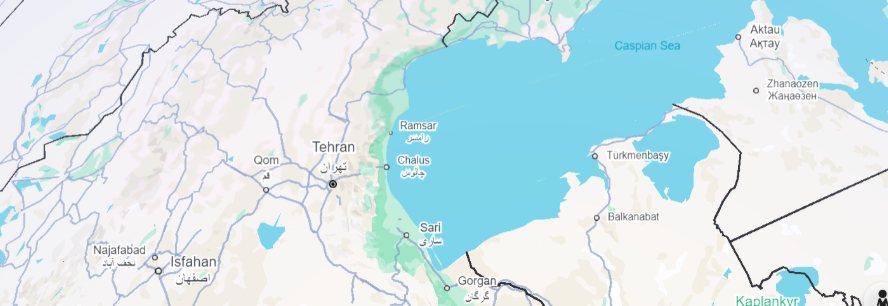
Geographies and trade lanes: Inside Iran: Tehran, Isfahan, Khuzestan (Shush; also, the oil province) and East Azerbaijan (Tabriz). Outside Iran: Bandar Abbas–Jebel Ali re-export trade, the Iran–Iraq land border (Bashmaq, Shalamcheh), the Iran–Turkey border (Bazargan–Gürbulak), and Kharg Island crude loadings to China. Supply chains at risk: Iranian steel billet and slab exports, petrochemicals (methanol, urea, polymers) to China, India and Turkey, and Iranian gas and electricity to Iraq. 

5. Scenarios (next 2–8 weeks) 

The base case is more of the same: rolling, localized protests with the rial weakening further. The tail risk worth planning for is strikes in the energy sector. Probabilities are analyst judgment. 

Scenario Trigger Probability Impact 
De-escalation Midyear wage rise announced; government pays part of its SSO debt; a war settlement or ceasefire lifts sentiment 20% Rial stabilizes at 210,000–235,000 tomans; protests shrink to weekly retiree gatherings 
Base case No wage review or a token one; liquidity stays above 50%; factional feuding continues 60% Rial drifts to 240,000–260,000 tomans; protests spread to more pension groups and municipal workers; no oil export disruption 
Escalation Strikes by contract workers in oil, gas or petrochemicals (Asaluyeh, Abadan refinery, Ahvaz) or bazaar closures; a security crackdown; a war flare-up 20% Rial above 280,000 tomans; possible hits to exports from South Pars petrochemicals and condensate; Gulf risk premium rises; internet shutdowns disrupt payments and trade 

6. Actions to consider 

Most non-Iranian firms should treat this as a monitoring event. The firms that should act now are those with sanctioned-trade exposure, Gulf energy exposure, or receivables from Iranian counterparties. 

Procurement 

  • Buyers of petrochemicals (methanol, urea, polyethylene) in Turkey, India and East Asia: identify a non-Iranian backup supplier, for example Saudi Arabia’s SABIC or Qatar’s Muntajat, for 4–6 weeks of volume in case South Pars strikes occur. 
  • Iraqi buyers of Iranian gas and power: confirm Qatari or Turkish backup arrangements ahead of winter demand. 

Logistics 

  • Traders shipping via Jebel Ali to Bandar Abbas: shorten credit terms and hold cargo until payment clears. 
  • Plan for possible internet or banking outages inside Iran by keeping offline copies of shipping and customs documents. 

Legal and compliance 

  • Screen counterparties against OFAC, EU and UK Iran sanctions lists. The article highlights “trustee” networks used for sanctions evasion, which are a common enforcement target. 
  • Check force-majeure clauses for “civil unrest” and “strike” wording, not only “war”. 
  • Confirm that political-risk and cargo cover does not exclude Iranian ports or the Gulf war-risk listed area. 

Finance 

  • Any rial-denominated exposure: assume a 10–15% further loss of value over 8 weeks in the base case, and 20%+ in escalation. 
  • Gulf-linked energy budgets: run a scenario with a USD 3–5/bbl risk premium in case Iranian energy-sector strikes occur.  

7. What to watch next 

The two signals that would change this assessment fastest are protests spreading to energy-sector workers and the rial passing 250,000 tomans. 

Indicator Who acts Inference 
Free-market USD rate (daily) Market, CBI Above 250,000 tomans = move toward High 
CBI interventions or new FX rules Central Bank of Iran Emergency FX auctions = the regime is losing control of the rate 
Midyear wage review decision Supreme Labour Council A real increase defuses protests; a delay or token rise feeds them 
SSO pension payments and government debt repayment Ministry of Labour, Plan and Budget Organization Repayment = de-escalation; missed or late pensions = escalation 
Strikes at Asaluyeh, Abadan, Ahvaz, Bandar Imam Contract oil, gas and petrochemical workers The key escalation trigger for markets 
Bazaar closures in Tehran, Tabriz, Isfahan Merchants Historically a sign of broad loss of confidence 
Ghalibaf–Pezeshkian dispute; judicial cases against MPs Majlis, judiciary, Supreme Leader’s office A ruling from the Leader’s office ends the dispute; continued fighting means policy paralysis 
War status and ceasefire diplomacy Government, SNSC, foreign mediators Settlement supports the rial; flare-up hits it and the Gulf risk premium 
Kharg Island loadings (satellite/AIS tracking) NIOC, tanker trackers A drop is the first hard sign of energy disruption 
Internet throttling (NetBlocks, Cloudflare Radar) Government Shutdowns usually come before or during crackdowns 

8. Bottom line 

The rial lost about 12% in a month, reaching 234,480 tomans per USD, and money supply is growing 54.4% a year. Retiree protests are spreading while Iran’s leaders fight among themselves. Oil markets are not affected yet; the 20% risk to watch is strikes by energy-sector workers. 

Sources 

  • Article by Mansoureh Galestan, 27 Sep 2026. It cites Tasnim for the liquidity figure and quotes Ghalibaf, Rasaee and the Sharyan Front. 
  • The comparison with 2023–25 liquidity growth and the background on Iran’s energy sector come from my training knowledge up to mid-2026, not from live sources.  

Dusk Standoff at the Stone Building

France Student Protests Turn Violent, 440 Detained Amid Budget Strike – Civil Unrest Alert

School blockades merged with a public-sector strike against the 2027 draft budget. 440 people were detained and 48 police injured in one day, while Prime Minister Lecornu tries to pass spending cuts with no stable majority. 

1. What happened 

On Tue 29 Sep, teenagers blockaded about 400 of France’s roughly 3,700 secondary schools over class sizes, teacher shortages and long timetables. Clashes with police followed in several cities, while unions struck against the government’s budget plans.  

Item Detail 
Detentions 440 nationwide, two-thirds placed in police custody, most of them minors (Interior Minister Laurent Nuñez, BFM TV) 
Police injured 48; 7 cases of hydrochloric acid thrown at officers 
Schools affected About 400 of about 3,700 lycées (education ministry) 
Hotspots Paris (Lamartine, Colbert, Hélène Boucher lycées), Seine-Saint-Denis, Lille (bins burned, teargas), Lyon, Villeurbanne, Décines-Charpieu, Bordeaux, Rennes, Nantes, Marseille 
Student demands Classes of 32 to 35 pupils, staff shortages, 8am to 6pm timetables (Union Syndicale Lycéenne, president Ryad Rani) 
Parallel strike Public-sector unions struck against the budget; about 40% of primary teachers stopped work per unions (FSU, Caroline Chevé); the ministry put strikers at just over 11% of all teachers and staff. CGT leader Sophie Binet gave the government 48 hours to drop the cuts before further action 
Budget figure €54 billion of 2027 savings (the Guardian’s “€54m” is a typo; €54bn is confirmed by France 24, Reuters and Bloomberg). Includes a 4th straight freeze on civil-servant base pay (saves €2bn), pension savings and sick-leave changes 
Political fight PM Sébastien Lecornu called escalation “irresponsible”; LFI leader Jean-Luc Mélenchon accused the government of a racist crackdown and urged activists to step in 
Policing A joint interior and education ministry circular ordered “proportionate use of force” outside schools; the student union called it a scandal 


2. Why it matters 

Escalation of an established pattern. It is the second autumn in a row in which a deficit-cutting budget has met strikes and street action. In 2025, the “Bloquons tout” movement of 10 Sep and the union strikes of 18 Sep followed Bayrou’s €44bn plan; Bayrou then lost a confidence vote and was replaced by Lecornu. New this year: minors are the main front line, police violence is now a political issue, and the presidential election is only 7 months away (April 2027). 

  • The budget is at stake, not just school policy. Lecornu presents the 2027 budget to cabinet on 1 Oct; the bill must reach the National Assembly by 6 Oct. Without the €54bn of savings, the deficit would approach 6.5% of GDP; with them, the target is 5.0% (4.8% excluding defence). Debt is near 120% of GDP, and interest costs rise by about €10bn next year. 
  • The government has no majority. Socialists call the plan a “bitter austerity potion”. Any concession to students, teachers or unions widens the deficit; any refusal raises the risk of censure. Lecornu could fall the way Bayrou did. 
  • Unrest is becoming politicised. Mélenchon (LFI) is calling on activists to join the school blockades, and a Seine-Saint-Denis mayor joined one. That extends the protests from schools into the 2027 campaign. 
  • Growth is weaker than planned. France will grow less than expected in 2026, so each euro of savings is harder to find and each concession costs more. 

3. Market impact 

The protests themselves do not move markets; the budget they target does. French 10-year debt now yields more than 4.8% and pays a 111bp premium over Germany, double the January level. Unrest that forces concessions or topples Lecornu widens it further. 

Market Level Move Read-through 
10-year OAT/Bund spread 111.2 bp (29 Sep) +5.8 bp d/d; about 55 bp in Jan 2026 and 86 bp in late Aug ING sees 100 to 125 bp in coming months; above 120 bp signals a political-fiscal break 
10-year OAT yield 4.83% (30 Sep) +65 bp m/m; +130 bp y/y; highest since 2008 France now yields more than Italy’s BTP; each 100 bp adds billions to annual interest over time 
30-year OAT yield 5.44% (30 Sep) +108 bp y/y Long-end pressure hits insurers and pension holders of OATs 
2027 borrowing Record €310bn issuance programme (2026) Debt near 120% of GDP; deficit 5.4% in 2026 Interest bill up about €10bn in 2027 
CAC 40 About 8,130 (18 Sep); 13-week low 8,141 on 10 Sep -6.6% over 4 weeks to 10 Sep Banks and domestic-exposed names most sensitive to OAT spread 
EUR/USD 1.128 (1 Oct) -0.5% d/d on broad dollar strength France is a euro-area drag, not a euro driver unless the spread passes 150 bp 
Sovereign ratings Moody’s Aa3, negative outlook Fitch reviewed France on 28 Aug A downgrade during budget turmoil would push the spread past 120 bp 
Energy, freight, insurance Not directly affected n/a Domestic unrest; ports and refineries not yet in the strike call (see section 7) 

4. Who is affected 

French banks and OAT holders carry the market risk; urban retail, transport and anyone running operations near lycées carry the street risk. 

Group Named players Effect Direction 
French banks BNP Paribas, Société Générale, Crédit Agricole Large OAT holdings; share prices track the OAT/Bund spread Hit 
Insurers and asset managers AXA, CNP Assurances, Amundi Mark-to-market losses on long OATs; 30-year at 5.44% Hit (but higher yields help new money) 
Urban retail and hospitality Carrefour, Casino, Fnac Darty, Accor; city-centre shops in Paris, Lille, Lyon Footfall drops on protest days; window and property damage risk Hit on protest days 
Public transport and outdoor advertising RATP, SNCF, Keolis, Transdev; JCDecaux (bus shelters vandalised in Lille) Service cuts on strike days; repair costs Hit 
Construction and public contractors Vinci, Eiffage, Bouygues Public capex cuts in a €54bn savings budget Negative 
Education and public sector 12 million pupils, about 850,000 teachers; FSU, CGT, SNES, USL Pay freeze (4th year), staff shortages, class sizes of 32 to 35 Hit 
Euro-area peers Italy BTP, Belgium OLO Contagion if the OAT spread jumps; Italy already trades tighter than France Mild negative 
Defence Thales, Dassault Aviation, Safran Defence is ring-fenced (deficit target 4.8% excluding defence) Protected 

Geographies: Paris and Seine-Saint-Denis; Lille (worst violence); Lyon and its suburbs (Villeurbanne, Décines-Charpieu); Bordeaux, Rennes, Nantes, Marseille. 

Supply chains at risk: none yet. Risk rises if the CGT widens action to refineries (TotalEnergies), ports (Le Havre, Marseille-Fos) or rail freight, as in past budget and pension fights. 

5. Scenarios (next 2 to 8 weeks, to late Nov 2026) 

The trigger window is the budget’s first reading: cabinet on 1 Oct, filing by 6 Oct, Assembly debate through October and November. The October half-term (about 17 Oct to 2 Nov) naturally pauses school blockades. Probabilities are our estimates. 

Scenario Trigger Probability OAT/Bund spread Impact 
De-escalation Government offers targeted education measures (smaller classes in priority zones, staffing hires); policing eases; half-term cools blockades; PS abstains rather than censures 25% Back to 90 to 100 bp Budget passes first reading with tweaks; protests fade to one-day union actions 
Base case Rolling union strike days after CGT’s 48-hour ultimatum; sporadic lycée blockades before and after half-term; budget debated amid partial concessions that trim savings to about €45bn to €50bn 50% 105 to 125 bp Deficit target slips toward 5.2% to 5.4%; ratings pressure; city-centre disruption 1 to 2 days a week 
Escalation A serious injury or death of a minor in a police clash; LFI-led mobilisation; PS joins a censure motion; Lecornu falls or the budget is pushed into a stop-gap “special law” 25% Above 125 bp, possible test of 150 bp Repeat of Bayrou’s fall in 2025; budget delayed into 2027; refinery or port strikes; rating downgrade risk 

6. Actions to consider 

Plan for a weekly strike-day rhythm in French cities through November, and hedge for the OAT/Bund spread passing 125 bp if the budget or the government breaks. 

Finance and treasury 

  • Stress-test French exposures at a 150 bp OAT/Bund spread and a one-notch rating downgrade; cap new long-dated OAT buying until the first reading passes. 
  • Lock euro funding for French entities now; French bank credit spreads widen with the OAT spread. 
  • If you sell to the French state or municipalities, model 5% to 10% lower 2027 public contract volumes and slower payment. 

Operations and people 

  • Track union strike calendars (CGT, FSU, SNES) and the student union USL; set a work-from-home trigger for staff in Paris, Lille and Lyon on announced days. 
  • Avoid scheduling deliveries, events or store activations near lycées in Paris (north and east), Seine-Saint-Denis, Lille, Lyon and Villeurbanne on school-blockade mornings. 
  • Review property insurance and security for street-level sites (shopfronts, advertising panels, bus shelters) in hotspot cities. 

Logistics and supply chain 

  • Add 3 to 5 days of buffer for France-routed freight in case strikes widen to SNCF freight, Le Havre or Marseille-Fos. 
  • Pre-book alternative routing via Antwerp, Rotterdam or Barcelona for time-critical cargo. 

Legal 

  • Check whether strikes and civil unrest count as force majeure in French supply and service contracts; send notices early if delays occur. 
  • For multinationals with French workforces, prepare for unions to reopen pay talks if the civil-service pay freeze passes. 

7. What to watch next 

The decisive signal is the Socialist Party: if it signals it will back a censure motion, Lecornu’s government and the €54bn plan are in real danger. 

Indicator Who / when Current reading Trigger and inference 
Budget unveiling Cabinet, 1 Oct; filing deadline 6 Oct €54bn savings; deficit target 5.0% Any added education money signals concession; a bigger savings figure signals confrontation 
CGT ultimatum Sophie Binet; 48 hours from 29 Sep Expired around 1 Oct Inter-union call for a national strike day = base case confirmed; renewable strikes = escalation 
School blockades USL, interior ministry tallies; daily About 400 of 3,700 lycées hit; 440 detained on 29 Sep Over 500 schools or a serious injury = escalation; under 100 = fading 
Policing and politics Interior Minister Nuñez, LFI, Défenseur des droits Circular on “proportionate force”; Mélenchon accusing racism An IGPN probe or viral video of abuse would widen protests 
Socialist Party stance PS group in National Assembly; October Called the plan “bitter austerity potion” Threat to back censure = high risk to Lecornu 
OAT/Bund spread Daily 111 bp Above 125 bp = markets pricing a government fall 
Rating actions Moody’s, S&P, Fitch Moody’s Aa3 negative Any downgrade during the debate accelerates the spread move 
Sector strikes beyond schools SNCF, RATP, refineries, ports Public-sector and firefighters only so far Refinery or port strike calls = supply-chain risk 
Opinion polls Ifop, Elabe; weekly Government and Macron deeply unpopular Majority public support for students raises pressure to concede 

8. Bottom line 

France saw 440 detentions and protests at about 400 of its 3,700 lycées in one day, merging with strikes against a €54bn austerity budget. With the OAT/Bund spread at 111 bp and no majority, a government fall would push it past 125 bp. 

Sources