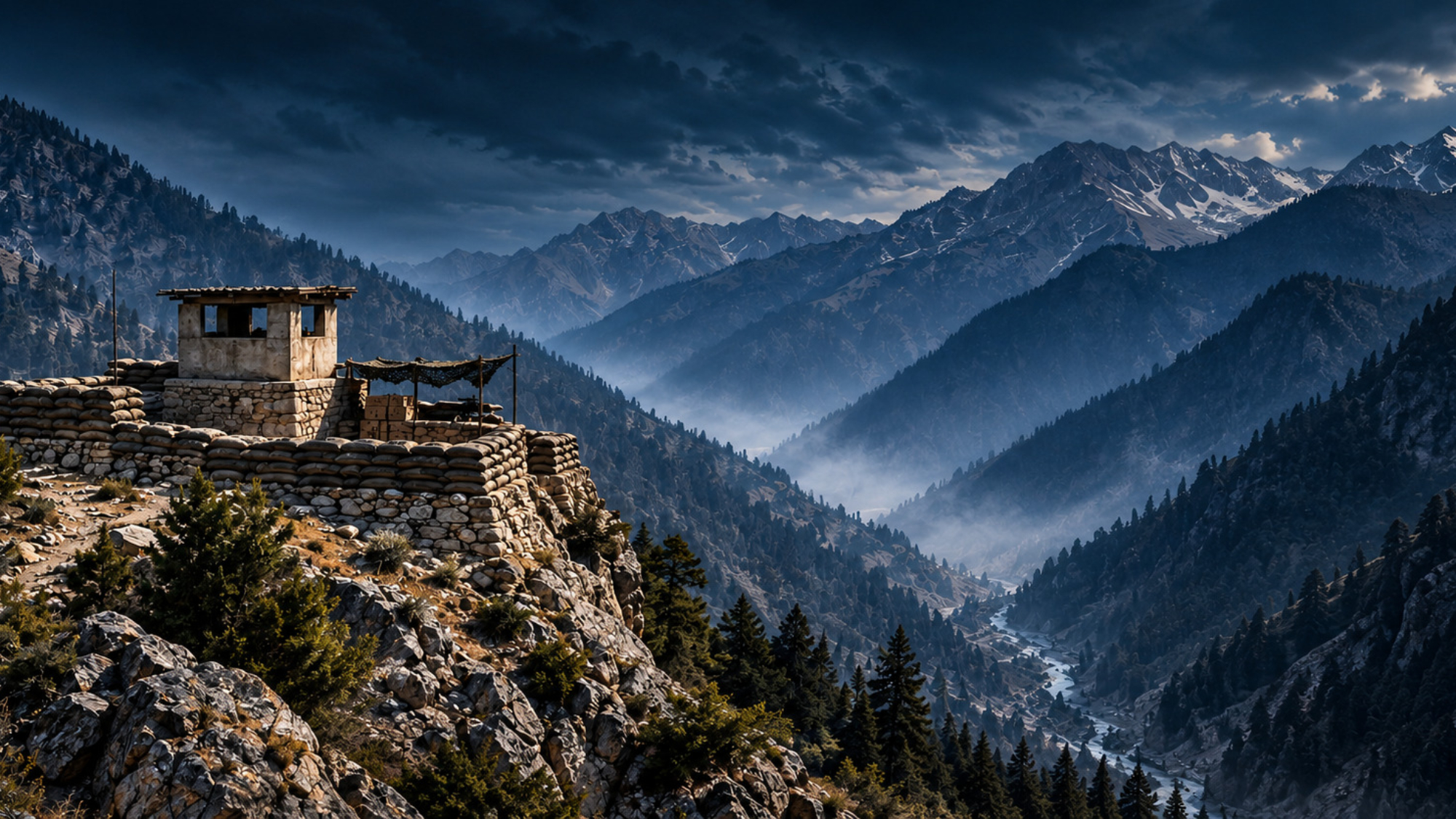
ALERT LEVEL: ELEVATED · Afghanistan–Pakistan border (Kamdesh, Nuristan / Chitral, Khyber Pakhtunkhwa) · Event: Sat 27 Sep 2026 · Issued 01 Oct 2026
Elevated, not High: this is a claimed counter-infiltration operation in a remote district, not a state-on-state clash. It becomes High if Pakistan responds militarily or major crossings (Torkham, Chaman) close.
1. What happened
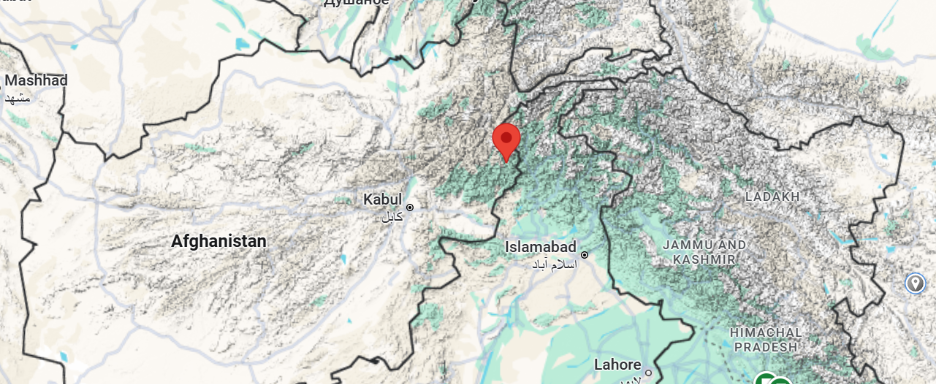
Afghanistan’s Taliban-run Ministry of Defense said on 27 Sep 2026 its forces killed 28 and captured 32 members of armed groups crossing the Durand Line into Kamdesh district, Nuristan. It accused Pakistan of training and sending the fighters, including Daesh (ISIS-K) members and former Afghan Republic soldiers. Others reportedly fled back into Pakistan.
| Claim | Status | Confidence |
| A clash took place in Kamdesh, Nuristan | Reported by Afghan MoD via Ariana News | Medium |
| 28 killed, 32 captured | Single-source government figure, unverified | Low–Medium |
| Pakistani military, “Arbaki” militia and Daesh present and coordinating | Allegation, no evidence published | Low |
| Pakistani intelligence recruited former Afghan soldiers with asylum/job promises | Allegation, no evidence published | Low |
Source: Ariana News (Kabul), 27 Sep 2026, quoting the Afghan Ministry of Defense statement. No independent, Pakistani or UN confirmation was available to me; Pakistan’s response is not known here.
2. Why it matters
This is a continuation of a worsening trend, not a new crisis: it reverses the usual direction of blame between Kabul and Islamabad.
- Mirror-image accusations: Pakistan has for years accused Kabul of sheltering TTP (Pakistani Taliban) fighters. Kabul now accuses Pakistan of the same thing in reverse, which hardens both sides.
- Recent history: In October 2025, the two countries fought their worst border clashes in years. This led to a ceasefire mediated by Qatar and Turkey, and to long closures of the Torkham and Chaman crossings. The status of those crossings and the ceasefire after mid-2026 is not known here; verify before relying on it.
- New element: The claim that former Republic-era soldiers are being recruited through promises of asylum and jobs. If it is credible, Kabul may crack down on returnees and ex-soldiers inside Afghanistan.
- Location: Kamdesh borders Chitral in Khyber Pakhtunkhwa. This is a remote mountain sector away from the main trade crossings, so the direct economic effect is small unless the conflict spreads south to Torkham (Nangarhar) or Chaman (Kandahar).
3. Who is affected
The businesses most exposed are those that rely on the Afghanistan–Pakistan land border during the autumn export season. Company names are examples of exposure, not reported effects.
| Group | Direction | Named examples | Why |
| Afghan fresh-fruit exporters | Hit if crossings close | Kandahar pomegranate and grape traders; Afghanistan Chamber of Commerce and Investment members | Sep–Nov is peak harvest; perishables lose value within days at a closed Torkham or Chaman |
| Pakistani cement makers using Afghan coal | Hit if crossings close | Lucky Cement, DG Khan Cement, Maple Leaf Cement, Fauji Cement | Afghan coal has been a cheaper substitute for South African coal |
| Pakistani exporters to Afghanistan | Hit if crossings close | Rice, pharmaceuticals, cement and FMCG shippers out of Peshawar and Quetta | Afghanistan is a key cash market for these goods |
| Iranian ports and Central Asian corridors | Benefit | Chabahar (Iran), Bandar Abbas (Iran), Hairatan–Termez (Uzbekistan), Turkmen rail links | Afghan trade shifts away from Karachi |
| Regional infrastructure sponsors | Higher risk | TAPI (Turkmengaz and partners), CASA-1000 (World Bank-backed), Uzbek Railways (Trans-Afghan railway) | Security premium rises on any project crossing the border |
| Logistics and transporters | Hit | Khyber Pakhtunkhwa trucking firms, Afghan Transit Trade carriers | Idle trucks and demurrage at crossings |
| Humanitarian operations | Disrupted | WFP, UNHCR, IOM in Nuristan and Kunar | Access limits; returnees from Pakistan face added screening |
Geographies and trade lanes: Nuristan, Kunar and Nangarhar on the Afghan side; Chitral, Bajaur and Khyber on the Pakistani side. Lanes at risk: Peshawar–Torkham–Jalalabad–Kabul and Quetta–Chaman–Spin Boldak–Kandahar. Supply chains at risk: Afghan coal into Pakistani cement kilns, Pakistani wheat flour and medicines into Afghanistan, and Afghan fruit and vegetables into Pakistani markets.
4. Scenarios (next 2–8 weeks)
The base case is a war of words with sporadic incidents. The swing factor is whether Pakistan treats this as a pretext for strikes or for closing crossings. Probabilities are analyst judgment.
| Scenario | Trigger | Probability | Impact |
| De-escalation | Pakistan denies quietly; Qatar/Turkey-mediated talks or a joint border mechanism meet; crossings stay open | 25% | Incident fades; no trade disruption; fruit season proceeds |
| Base case | Duelling statements; more small clashes in Kunar/Nuristan; Pakistan steps up TTP accusations; brief or partial crossing slowdowns | 55% | Short Torkham/Chaman delays of days, not weeks; added screening and deportation pressure on Afghans in Pakistan; small cost rise on the Karachi transit route |
| Escalation | Pakistani airstrikes in Afghanistan or Afghan attacks on Pakistani posts, as in Oct 2025; extended closure of Torkham and Chaman | 20% | Weeks-long trade halt; Afghan fruit losses at peak season; Pakistani cement firms revert to imported coal at higher cost; traffic shifts to Iranian and Central Asian routes; TAPI/CASA-1000 timelines slip |
5. Actions to consider
Act now only if you move goods across the Afghanistan–Pakistan land border or have staff in eastern Afghanistan or Khyber Pakhtunkhwa. Everyone else: monitor.
Procurement
- Pakistani cement and power buyers of Afghan coal: price a backup cargo of imported coal (South African or Indonesian) for delivery to Karachi, and hold 30–45 days of kiln coal.
- Buyers of Afghan dried fruit, nuts and pomegranates: pull October–November shipments forward and confirm a second supplier through Iran or the UAE.
Logistics
- Pre-clear documents at Torkham and Chaman; keep trucks off the border on days after any new clash claim.
- Get a quote now for the Chabahar or Bandar Abbas route and for Hairatan–Termez rail, so you can switch within a week.
- Use cold-chain or controlled-atmosphere storage on the Afghan side for perishables waiting to cross.
Legal
- Check whether your contracts’ force-majeure clauses cover “government border closure” explicitly, not only “war” or “hostilities”; the October 2025 closures were political decisions, not acts of war.
- Check cargo and political-risk policies for land-transit and border-closure exclusions; standard marine war-risk cover does not apply.
- Sanctions screening: any payment touching Afghan state entities must clear UN 1988 list and OFAC checks.
Finance
- Add a closure-delay cost line (demurrage, spoilage, rerouting) to Q4 forecasts for Af-Pak lanes.
- Notify customers now that transit surcharges may apply if the border closes, so they are not surprised later.
People
- Review travel and movement plans for Kunar, Nuristan, Nangarhar, Chitral and Bajaur.
6. What to watch next
Pakistan’s official response within the next 7 days is the single most important signal: silence or a denial point to the base case, while an ISPR statement naming Afghan-based attackers points to escalation.
| Indicator | Who acts | Inference |
| ISPR / Pakistan Foreign Office statement | Pakistan military and MoFA | Denial only → base case; counteraccusation plus “right to respond” → escalation risk up |
| Troop and artillery moves near Chitral, Bajaur, Kurram | Pakistan Army, Frontier Corps | Build-up precedes cross-border strikes |
| Torkham and Chaman status | Pakistan Customs, Afghan border police | Any closure longer than 48 hours = trade impact begins |
| Mediator activity | Qatar, Turkey, China (trilateral FM format) | New meeting dates = de-escalation |
| Deportation pace of Afghans from Pakistan | Pakistan Interior Ministry, UNHCR, IOM | Faster removals = Islamabad applying pressure |
| Further Afghan MoD “infiltration” claims | Afghan Ministry of Defense | Repeated claims build a case for retaliation |
| ISIS-K attacks in Kunar/Nuristan or in Pakistan | ISIS-K | A large attack could pull both states to blame and strikes |
| Project statements | TAPI partners, CASA-1000, Uzbek Railways | Delay notices confirm a rising regional risk premium |
| Fruit truck backlog and prices at Kandahar and Peshawar markets | Traders, chambers of commerce | Early, hard evidence of trade disruption |
7. Bottom line
Kabul claims it killed 28 and captured 32 Pakistan-backed infiltrators in remote Nuristan. The claim is unverified and has no global market impact (0% on Brent, freight or insurance). The real risk, put at 20%, is a repeat of the October 2025 Torkham/Chaman closures during the peak Sep–Nov fruit and coal trade season.
Sources
- Ariana News, “Afghanistan says 28 killed, 32 captured in Nuristan operation,” 27 Sep 2026