1. What happened
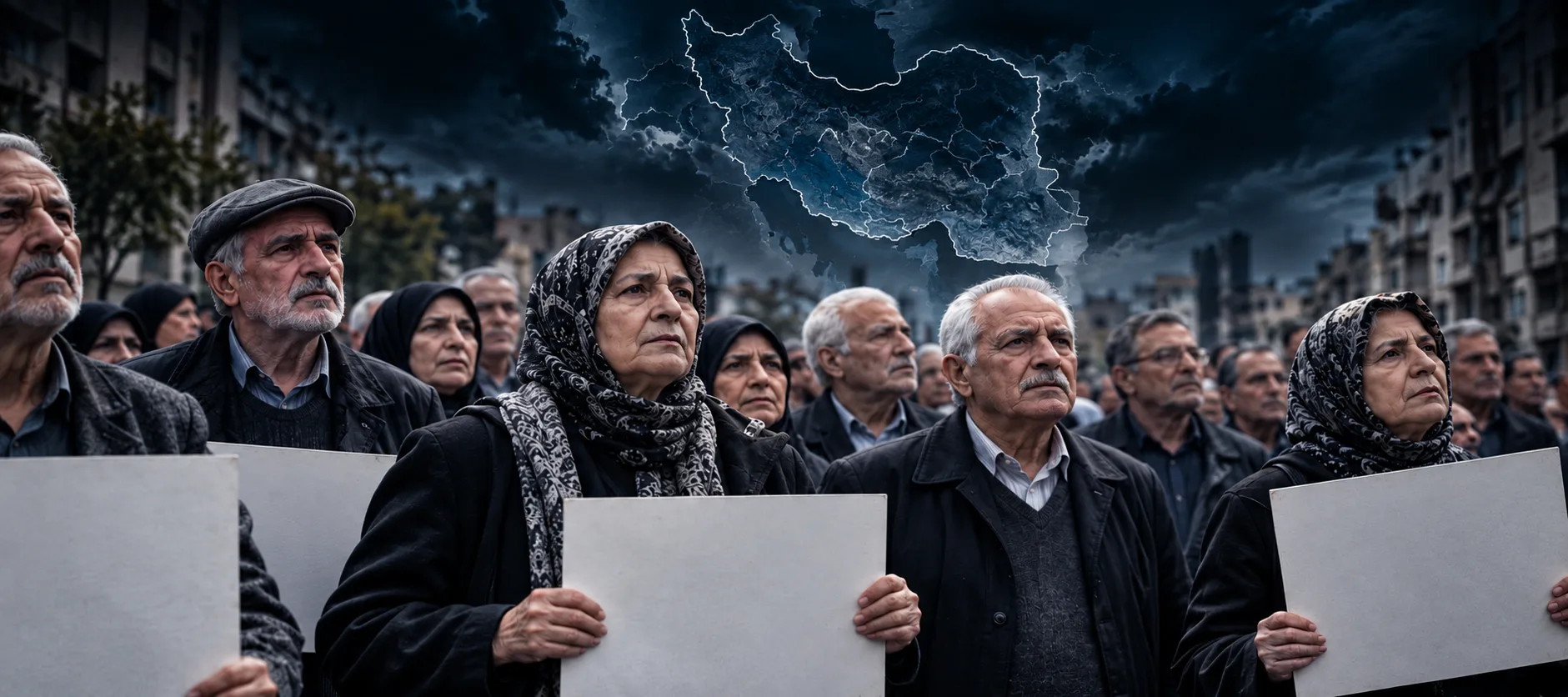
On 27 Sep 2026, retirees protested in Isfahan, Tehran and Shush over pensions that they say cover “only one week” of costs. Tabriz municipal drivers also protested over pay. At the same time, the free-market dollar reached about 234,480 tomans (+13.8% month on month). Tasnim reported that liquidity growth was 54.4% year on year in August. Separately, Parliament Speaker Ghalibaf challenged the cabinet’s emergency powers, and MP Rasaee said he had received a 10-month sentence.
| Claim | Source | Confidence |
| Retiree protests in Isfahan (steel retirees), Tehran, Shush; Tabriz driver protest | Article; protest videos not independently checked | Medium |
| Free-market USD about 234,480 tomans, +13.8% m/m | Article (market rate, likely from bonbast-type trackers) | Medium–High |
| Liquidity growth 54.4% y/y in August | Tasnim (IRGC-affiliated, so this is a regime source admitting it) | High |
| Ghalibaf letter to Pezeshkian disputing cabinet deadline extensions | Article, citing Parliament | Medium–High |
| Rasaee 10-month sentence after a complaint by Ghalibaf | Rasaee’s own speech in Parliament | Medium–High |
| Claims of a purge of other hardline MPs | Sharyan Front, no evidence | Low |
Source note: The article (by Mansoureh Galestan, 27 Sep 2026) appears to come from an Iranian-opposition-aligned outlet, so its framing should be treated as partisan. Its hard numbers come from Iranian state media and market rates. I have no live access to confirm them.
2. Why it matters
The protests continue a trend that is now getting worse. What is new is that economic anger and elite infighting are reinforcing each other while the state operates under wartime emergency rules.
- Currency collapse is speeding up: a 13.8% rise in the dollar means the rial lost about 12% of its value in one month. A month ago the rate was about 206,000 tomans.
- Money printing: liquidity growth of 54.4% is roughly double the 25–30% annual pace seen in 2023–25. That points to more inflation ahead, and Tasnim itself warns of it. This 2023–25 comparison is approximate and from my own knowledge.
- Fiscal strain on pensions: retirees are demanding that the government repay its debts to the Social Security Organization (SSO). The state is in effect funding itself by underpaying the pension fund.
- Elite split: the Speaker is challenging the President’s emergency powers, MPs are suing each other, and hardliners are protesting outside Rouhani’s home over his call for an “honorable” end to the war. A divided leadership is slower to respond with either concessions or a crackdown.
- Context gap: the article refers to a war and a wartime emergency in 2026. I have no reliable information on how that conflict developed after mid-2026, so verify its current status before using this alert.
3. Market impact
The only market move this event directly causes is in the Iranian rial. Global energy, freight and insurance markets react to Gulf military risk, not to pension protests. I could not check live prices, so the blanks below should be filled from Platts, Lloyd’s List or broker notes.
| Channel | Impact from this event | Number |
| Iranian rial (free market) | Direct | 234,480 tomans/USD on 27 Sep; +13.8% m/m; about 12% loss of rial value |
| Iranian money supply | Direct | Liquidity +54.4% y/y (Aug) |
| Brent | None from protests alone; a risk premium appears only if energy-sector strikes or Gulf military action follow | 0% attributable; current Brent: ___ |
| Iranian crude exports | No disruption reported | Kharg loadings (Kpler/Vortexa): ___ kb/d |
| Gulf tanker freight (e.g., VLCC Middle East–China) | None attributable | Rate: ___; change since 27 Sep: ___% |
| Gulf / Hormuz war-risk premium | Driven by the war status, not by protests | Hull %: ___ (check Lloyd’s Joint War Committee listed areas) |
| Regional FX exposed to Iran trade | Indirect: Iraqi dinar parallel rate, Afghan afghani, Armenian dram | Negligible from this event |
| Tehran Stock Exchange | Likely nominal gains as the rial falls (an inflation hedge), real losses | TEDPIX change: ___% |
4. Who is affected
The groups most exposed are Iranian state-linked industrial employers and the SSO, plus foreign businesses that trade with Iran through sanctions-bypassing channels. Company names are examples of exposure, not reported effects.
| Group | Direction | Named examples | Why |
| Iranian steel producers | Hit | Mobarakeh Steel, Isfahan Steel (Zob Ahan) | Retiree protests in Isfahan; wage and pension pressure on workers; rial-driven input costs |
| Pension and social-security funds | Hit | Social Security Organization (SSO), Shasta (SSO’s investment holding), Steel Industry Pension Fund | Government debts unpaid; pressure to sell holdings or raise payouts |
| Iranian automakers and import-dependent manufacturers | Hit | Iran Khodro, SAIPA | Parts imported in USD; weak rial raises costs |
| Municipal services | Hit | Tabriz municipality contractors | Wage protests by contract drivers |
| Iranian exporters (rial-cost, USD-revenue) | Relative benefit | Petrochemical firms (e.g., Persian Gulf Petrochemical Industries Co.), copper (National Iranian Copper Industries) | Weaker rial lowers local costs, but a strike risk exists |
| Buyers of Iranian crude | Watch | Independent “teapot” refiners in Shandong, China | Supply risk only if energy workers strike |
| Iraqi power utilities | Watch | Iraq Ministry of Electricity (Iranian gas imports) | Gas supply risk if Iran’s domestic crisis deepens in winter |
| Re-export hubs and traders | Payment and FX risk | Dubai/Sharjah traders, Turkish and Iraqi Kurdish border traders, Armenian traders | Rial collapse squeezes Iranian buyers’ ability to pay |
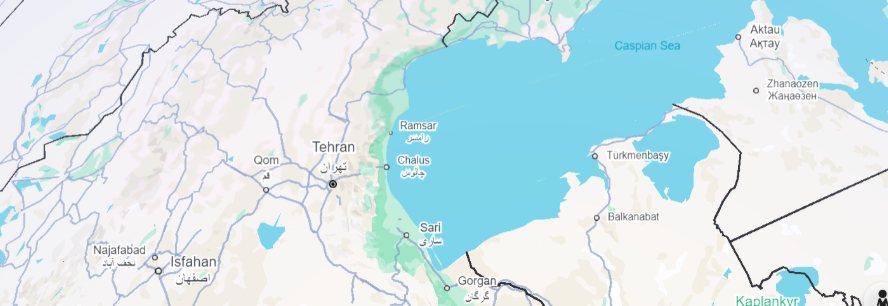
Geographies and trade lanes: Inside Iran: Tehran, Isfahan, Khuzestan (Shush; also, the oil province) and East Azerbaijan (Tabriz). Outside Iran: Bandar Abbas–Jebel Ali re-export trade, the Iran–Iraq land border (Bashmaq, Shalamcheh), the Iran–Turkey border (Bazargan–Gürbulak), and Kharg Island crude loadings to China. Supply chains at risk: Iranian steel billet and slab exports, petrochemicals (methanol, urea, polymers) to China, India and Turkey, and Iranian gas and electricity to Iraq.
5. Scenarios (next 2–8 weeks)
The base case is more of the same: rolling, localized protests with the rial weakening further. The tail risk worth planning for is strikes in the energy sector. Probabilities are analyst judgment.
| Scenario | Trigger | Probability | Impact |
| De-escalation | Midyear wage rise announced; government pays part of its SSO debt; a war settlement or ceasefire lifts sentiment | 20% | Rial stabilizes at 210,000–235,000 tomans; protests shrink to weekly retiree gatherings |
| Base case | No wage review or a token one; liquidity stays above 50%; factional feuding continues | 60% | Rial drifts to 240,000–260,000 tomans; protests spread to more pension groups and municipal workers; no oil export disruption |
| Escalation | Strikes by contract workers in oil, gas or petrochemicals (Asaluyeh, Abadan refinery, Ahvaz) or bazaar closures; a security crackdown; a war flare-up | 20% | Rial above 280,000 tomans; possible hits to exports from South Pars petrochemicals and condensate; Gulf risk premium rises; internet shutdowns disrupt payments and trade |
6. Actions to consider
Most non-Iranian firms should treat this as a monitoring event. The firms that should act now are those with sanctioned-trade exposure, Gulf energy exposure, or receivables from Iranian counterparties.
Procurement
- Buyers of petrochemicals (methanol, urea, polyethylene) in Turkey, India and East Asia: identify a non-Iranian backup supplier, for example Saudi Arabia’s SABIC or Qatar’s Muntajat, for 4–6 weeks of volume in case South Pars strikes occur.
- Iraqi buyers of Iranian gas and power: confirm Qatari or Turkish backup arrangements ahead of winter demand.
Logistics
- Traders shipping via Jebel Ali to Bandar Abbas: shorten credit terms and hold cargo until payment clears.
- Plan for possible internet or banking outages inside Iran by keeping offline copies of shipping and customs documents.
Legal and compliance
- Screen counterparties against OFAC, EU and UK Iran sanctions lists. The article highlights “trustee” networks used for sanctions evasion, which are a common enforcement target.
- Check force-majeure clauses for “civil unrest” and “strike” wording, not only “war”.
- Confirm that political-risk and cargo cover does not exclude Iranian ports or the Gulf war-risk listed area.
Finance
- Any rial-denominated exposure: assume a 10–15% further loss of value over 8 weeks in the base case, and 20%+ in escalation.
- Gulf-linked energy budgets: run a scenario with a USD 3–5/bbl risk premium in case Iranian energy-sector strikes occur.
7. What to watch next
The two signals that would change this assessment fastest are protests spreading to energy-sector workers and the rial passing 250,000 tomans.
| Indicator | Who acts | Inference |
| Free-market USD rate (daily) | Market, CBI | Above 250,000 tomans = move toward High |
| CBI interventions or new FX rules | Central Bank of Iran | Emergency FX auctions = the regime is losing control of the rate |
| Midyear wage review decision | Supreme Labour Council | A real increase defuses protests; a delay or token rise feeds them |
| SSO pension payments and government debt repayment | Ministry of Labour, Plan and Budget Organization | Repayment = de-escalation; missed or late pensions = escalation |
| Strikes at Asaluyeh, Abadan, Ahvaz, Bandar Imam | Contract oil, gas and petrochemical workers | The key escalation trigger for markets |
| Bazaar closures in Tehran, Tabriz, Isfahan | Merchants | Historically a sign of broad loss of confidence |
| Ghalibaf–Pezeshkian dispute; judicial cases against MPs | Majlis, judiciary, Supreme Leader’s office | A ruling from the Leader’s office ends the dispute; continued fighting means policy paralysis |
| War status and ceasefire diplomacy | Government, SNSC, foreign mediators | Settlement supports the rial; flare-up hits it and the Gulf risk premium |
| Kharg Island loadings (satellite/AIS tracking) | NIOC, tanker trackers | A drop is the first hard sign of energy disruption |
| Internet throttling (NetBlocks, Cloudflare Radar) | Government | Shutdowns usually come before or during crackdowns |
8. Bottom line
The rial lost about 12% in a month, reaching 234,480 tomans per USD, and money supply is growing 54.4% a year. Retiree protests are spreading while Iran’s leaders fight among themselves. Oil markets are not affected yet; the 20% risk to watch is strikes by energy-sector workers.
Sources
- Article by Mansoureh Galestan, 27 Sep 2026. It cites Tasnim for the liquidity figure and quotes Ghalibaf, Rasaee and the Sharyan Front.
- The comparison with 2023–25 liquidity growth and the background on Iran’s energy sector come from my training knowledge up to mid-2026, not from live sources.