

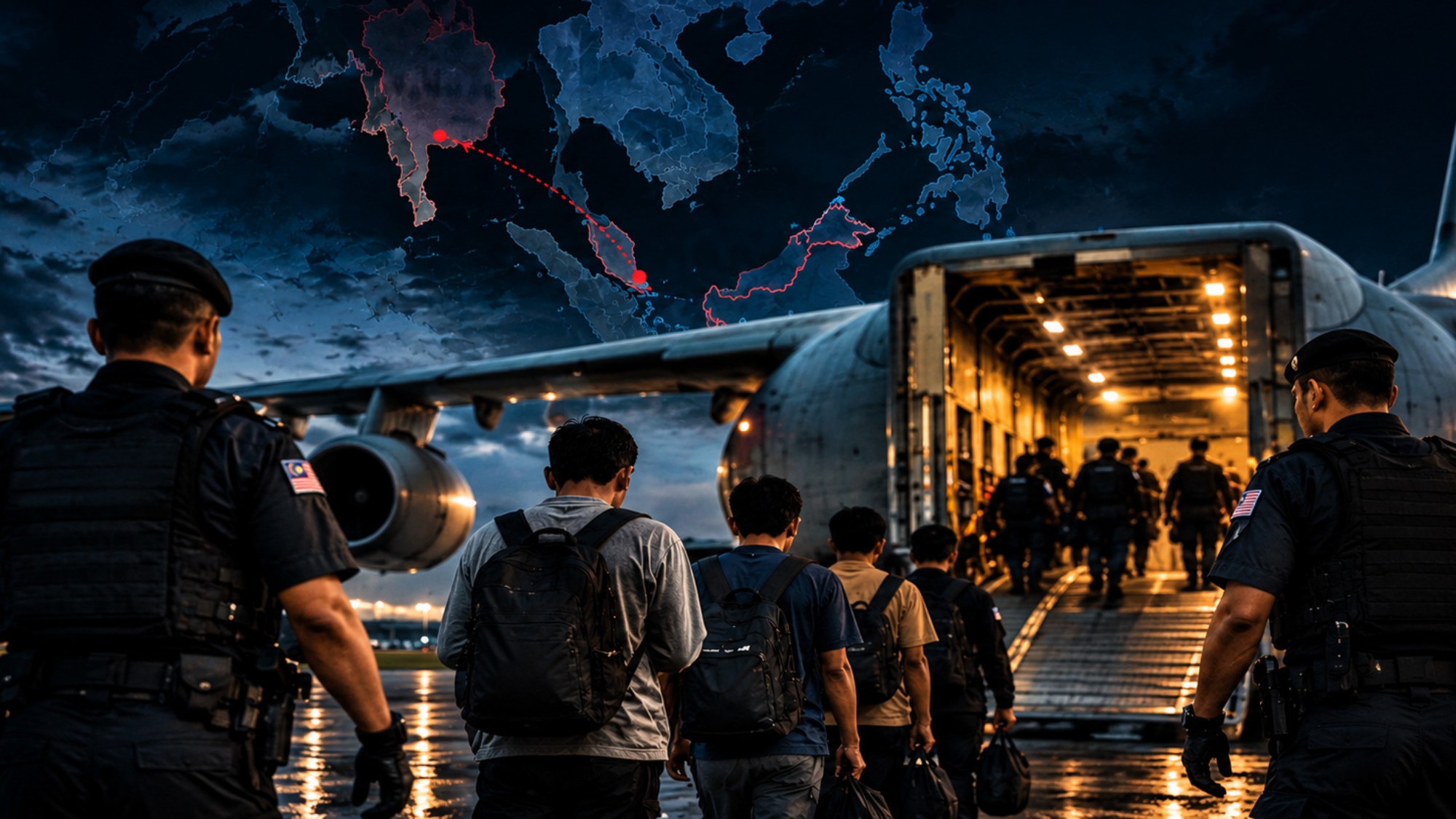
ALERT LEVEL: LOW (markets) / ELEVATED (human-rights and supply-chain reputation) · Malaysia (Lumut naval base, Perak) to Myanmar · Event: Tue, likely 29 Sep 2026 ·
This has no direct effect on markets. The risk sits with companies that employ or source from Malaysian migrant and refugee labour, because of scrutiny from buyers, regulators and campaigners.
1. What happened
Malaysia has begun sending home about 1,476 Myanmar nationals held in detention, described as mostly Rohingya. They are travelling by Myanmar naval warships and a hospital ship from the Lumut naval base. This is the first phase of a 5,000-person return that Myanmar agreed to in July. Malaysia calls the returns voluntary. UNHCR says it had no role and that conditions for safe return do not exist.
| Item | Value |
| Phase 1 returnees | 1,476 (BERNAMA headline), “nearly 1,500” (Al Jazeera/AFP) |
| Agreed total | 5,000, so phase 1 is about 30% |
| Rohingya in Malaysia (Feb 2026) | 126,144+, so phase 1 is about 1.2% and the full deal about 4.0% |
| Rohingya in Bangladesh | 1.2M+ |
| Transport | 2 Myanmar navy warships and 1 hospital ship |
| Opposing the returns | UNHCR, MSF, Arakan Rohingya National Council, 160+ civil-society groups |
Sources: Al Jazeera, citing AFP and Reuters; BERNAMA headline for the 1,476 figure. Confidence: High that the returns are under way and on the numbers. Medium on who is being returned: BERNAMA says “Myanmar detainees” while Al Jazeera says “Rohingya”, so the group may include non-Rohingya Myanmar nationals. Unverifiable whether the returns are voluntary, since journalists were barred from the site.
2. Why it matters
This is an escalation of a trend. Malaysia’s tougher stance on Rohingya (evictions in Penang, detentions outside UNHCR’s office in July) has turned into large-scale, state-run returns by ship while fighting continues in Rakhine.
- A first for ASEAN: Earlier Bangladesh–Myanmar repatriation plans (2018, 2019, 2023) all stalled. This is the first large organized return of Rohingya from an ASEAN country, and it sets a template.
- Returnees are sent into an active war zone: The Arakan Army controls much of Rakhine, and the article reports a military air strike that killed at least 33 people at a Rakhine market. Returnees face the risk of being forced into armed groups and of ending up in displacement camps.
- Legal position: Malaysia has not signed the 1951 Refugee Convention, so it argues that non-refoulement (the rule against returning people to danger) does not bind it by treaty. Rights groups argue that customary international law still applies.
- Engagement with the junta: Anwar plans to invite Senior General Min Aung Hlaing to Malaysia. That would be a significant step toward normalizing relations with Myanmar’s military government, and it stands apart from the wider ASEAN position on Myanmar.
- More to come: Phase 1 covers only about 30% of the agreed 5,000. Further phases are likely within the 2–8 week window.
3. Market impact
No price-moving impact. The channels are labour supply, which is minor, and reputational and compliance risk in Malaysian export supply chains.
| Channel | Impact | Number |
| Brent / LNG | None. The Kyaukphyu–Kunming oil and gas pipelines in Rakhine are exposed to the Rakhine war but not to this event. | 0% attributable |
| Freight | None. Transfers use Myanmar naval ships, not commercial shipping. | No change |
| Insurance (war-risk) | None for Malaysian routes. Myanmar ports already carry conflict risk. | No change |
| MYR / MMK | None | 0% attributable |
| Malaysian informal labour pool | Small: 1,476 is about 1.2% of registered Rohingya; the full 5,000 is about 4.0% | Most work informally in fish markets, construction, recycling and cleaning |
| ESG and forced-labour risk premium | Rises for Malaysian exporters with migrant-heavy workforces | Qualitative; watch US CBP and EU actions |
4. Who is affected
The groups most exposed are Malaysian export industries with a history of forced-labour findings and the global brands that buy from them. Rohingya workers are mostly informal, so the direct loss of labour is small and concentrated in a few places. Company names below are examples of exposure, not reported links to this event.
| Group | Direction | Named examples | Why |
| Palm oil | Reputational risk | FGV Holdings, SD Guthrie (formerly Sime Darby Plantation), IOI, KLK; buyers Unilever, Nestlé, P&G | Past US CBP forced-labour orders (2020) against FGV and Sime Darby Plantation; heavy reliance on migrant workers |
| Rubber gloves | Reputational risk | Top Glove, Hartalega, Supermax | Past CBP orders (2020–21); buyers are hospital systems and procurement groups |
| Seafood and fish markets | Labour gaps | Penang and Klang fish markets, fishing fleets | Rohingya are concentrated here (see the Penang evictions) |
| Construction and recycling | Small labour gaps | Small contractors in the Klang Valley and Penang | Informal Rohingya workforce |
| Myanmar military government | Diplomatic gain | Myanmar’s military government (SAC) under Min Aung Hlaing | Legitimacy through the Malaysian deal and a possible visit |
| Rakhine state | More humanitarian strain | Returnees, IDP camps, WFP and ICRC operations | Returns into an active conflict and disease zone |
| China-linked Rakhine assets | Background risk | CITIC-led Kyaukphyu deep-sea port; CNPC/Sino-Myanmar oil and gas pipelines | Located in a contested area; not affected by this event |
| Bangladesh | Indirect | Cox’s Bazar camps (1.2M+ refugees) | Sets a precedent that may increase pressure for returns from Bangladesh |
Geographies and routes: Lumut (Perak) to Myanmar by sea, with the destination port not disclosed; Penang and the Klang Valley, where Rohingya communities live; Rakhine. Supply chains at risk: any Malaysian export supply chain where refugee or undocumented workers sit in tier 2–3 subcontracting.
5. Scenarios (next 2–8 weeks)
The base case is that Malaysia continues with further phases despite international criticism. Probabilities are analyst judgment.
| Scenario | Trigger | Probability | Impact |
| Pause | Strong ASEAN, US or EU pressure; UNHCR access refused; a court challenge in Malaysia; a returnee death reported | 20% | Phase 2 delayed; little effect on business |
| Base case | Phase 2 proceeds toward the 5,000 total; criticism remains verbal; Min Aung Hlaing visit planned | 60% | About 3,500 more returns; immigration raids continue; more NGO and media scrutiny of Malaysian labour supply chains |
| Escalation | Reports of abuse, forced conscription or deaths among returnees; bigger raids and detentions in Malaysia; Min Aung Hlaing visits Malaysia | 20% | US State Department or Congress criticism and a downgrade risk in the Trafficking in Persons report; campaigns targeting brands that buy from Malaysia; more Rohingya boat departures from Bangladesh as the sailing season opens (Nov–Apr) |
6. Actions to consider
The actions below are for companies with Malaysian manufacturing, plantation or seafood suppliers. For others, this is a monitoring event.
Procurement
- Brands buying palm oil, gloves or seafood from Malaysia: ask tier-1 suppliers to confirm in writing within 30 days how they recruit and treat refugee, undocumented and subcontracted workers.
- If you depend on a single Malaysian supplier with a past forced-labour finding, identify a backup: Indonesian palm oil, Thai or Vietnamese gloves.
Logistics
- No action needed. Commercial shipping and ports are not affected.
Legal and compliance
- Map your exposure under the US forced-labour import ban (Tariff Act Section 307), the EU Forced Labour Regulation (applies from Dec 2027) and the EU Corporate Sustainability Due Diligence Directive.
- Make sure supplier codes of conduct ban retaliation against workers who hold UNHCR cards.
Finance and communications
- ESG teams: flag Malaysian supplier risk in your next sustainability report review.
- Prepare short holding statements in case NGOs link your supply chain to raids or deportations.
7. What to watch next
Two things will show whether this stays a political story or starts to affect supply chains: when the next ship sails, and the first independent reports on what happens to returnees.
| Indicator | Who acts | What it would tell you |
| Phase 2 date and numbers | Malaysian Home Ministry, Immigration Department | Pace toward the 5,000 total |
| Independent reports on returnees | UNHCR, MSF, Fortify Rights, Human Rights Watch, ARNC | Abuse or conscription reports would point to escalation |
| Min Aung Hlaing visit to Malaysia | Prime Minister’s Office (Anwar), Myanmar’s military government | A visit means deeper engagement with the junta and faster returns |
| ASEAN summit statements (late 2026, Philippines as chair) | ASEAN | Whether other members back or criticize Malaysia |
| US and EU statements; Trafficking in Persons report | US State Department, EU External Action Service | Risk of trade or reputational consequences |
| Immigration raids and detentions | Malaysian police, Immigration Department | More detentions would supply further phases |
| Fighting in Rakhine and Arakan Army statements | Myanmar military, Arakan Army | Shows how safe it is where returnees are sent |
| Boat departures from Cox’s Bazar | Bangladesh, UNHCR, Malaysian Maritime Enforcement Agency | The Nov–Apr sailing season usually brings more Andaman Sea crossings |
| CBP forced-labour orders or NGO campaigns | US CBP, campaign groups | Direct supply-chain consequences for brands |
8. Bottom line
Malaysia has sent home 1,476 of an agreed 5,000 Myanmar detainees, mostly Rohingya (about 30% of the deal and 1.2% of the 126,144 Rohingya in Malaysia), against UN warnings. Markets are unaffected, but companies sourcing palm oil, gloves or seafood from Malaysia face higher forced-labour and reputational scrutiny.
Sources
- Al Jazeera report citing AFP and Reuters, supplied by the user. BERNAMA headline: “Malaysia Sends Home 1,476 Myanmar Detainees In First Phase Of Repatriation Programme”.